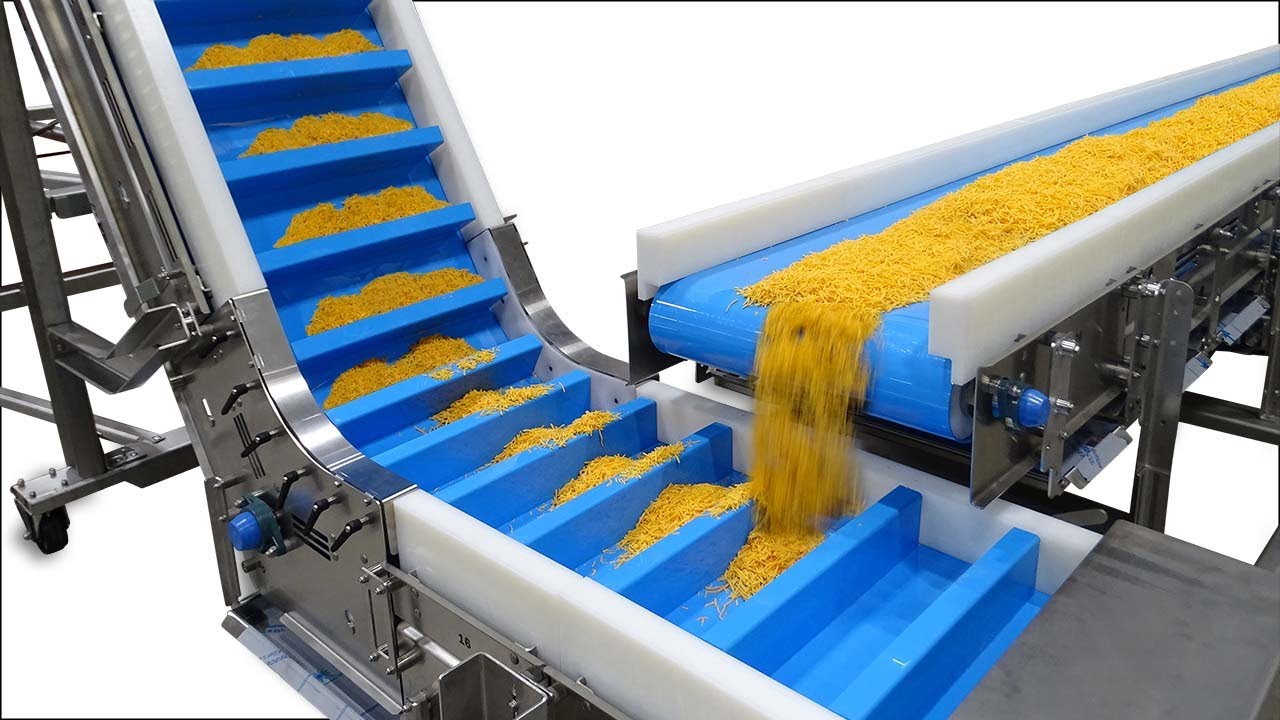
The best food-safe conveyor belt is not simply the one labeled “food grade.” It is the belt whose complete construction is documented for the actual food, contact time, temperature, cleaning chemicals, and target market. It must also operate in a conveyor that can be cleaned, inspected, drained, and maintained without creating contamination traps.
For U.S. applications, suppliers should identify the relevant FDA food-contact basis and permitted conditions of use. For EU applications, buyers normally need evidence under Regulation (EC) No 1935/2004 and any applicable specific measure, including the current consolidated version of Regulation (EU) No 10/2011 for plastic materials.
Compliance is only the first gate. Belt texture, edge construction, splices, supports, tracking, drainage, and cleanability determine whether the installed conveyor remains hygienic in daily production.
Key Takeaways
- “Food-safe” must be verified for a defined food, temperature, contact time, and market.
- Material compliance does not make the complete conveyor hygienic.
- PU, PVC, silicone, rubber, modular plastic, and metal belts fit different food processes.
- Request declarations, migration conditions, traceability, cleaning limits, and splice details before purchase.
What Does “Food-Safe Conveyor Belt” Mean?
In 2026, EU framework rules apply to materials intended, already used, or reasonably expected to contact food. Regulation (EC) No 1935/2004 requires materials not to transfer constituents in amounts that endanger health, unacceptably change food composition, or deteriorate sensory characteristics (European Union, Regulation (EC) No 1935/2004 on Food Contact Materials).
A food-safe conveyor belt is therefore a documented food-contact article used within its declared limits. The declaration should cover the actual belt construction, not merely the base polymer. Covers, fabric reinforcement, pigments, plasticizers, adhesives, edge sealants, flights, sidewalls, and splice materials can all affect suitability.
The term “FDA approved” is often used too broadly. FDA generally regulates food-contact substances and conditions rather than issuing a simple universal approval badge for every finished conveyor belt. Ask the supplier for the exact regulatory basis, applicable food types, conditions of use, limitations, and supporting compliance statement.
Food-contact compliance and hygienic design answer different questions. Compliance asks whether material constituents may transfer into food under intended use. Hygienic design asks whether the belt and conveyor can be cleaned and maintained well enough to prevent soil, allergens, microorganisms, chemicals, insects, and foreign material from contaminating product.
FDA vs EU Food-Contact Compliance in 2026
As of 2026, the FDA reference system distinguishes nine broad food types and ten conditions of use, ranging from high-temperature sterilization to refrigerated, frozen, and high-temperature cooking conditions. A material suitable for dry cereal at room temperature is not automatically suitable for hot fatty meat (FDA, Food Types and Conditions of Use for Food Contact Substances).
| Requirement | United States | European Union |
|---|---|---|
| Core question | Is each food-contact substance permitted for the intended food and condition of use? | Does the finished food-contact material meet the framework and applicable specific measures? |
| Main framework | Federal Food, Drug, and Cosmetic Act plus applicable CFR rules, FCNs, exemptions, and limitations | Regulation (EC) No 1935/2004 |
| Plastic-specific rules | Material- and substance-specific regulatory basis | Regulation (EU) No 10/2011 |
| Use conditions | FDA food types and Conditions of Use A-J | Migration testing with relevant food simulants, time, and temperature conditions |
| Typical supplier evidence | Compliance letter citing exact regulatory basis and limitations | Declaration of Compliance plus supporting documentation where required |
| Traceability | Lot and supply-chain records expected under food-safety systems | Article 17 of EC 1935/2004 establishes traceability requirements |
The current consolidated EU 10/2011 text dated February 23, 2026 sets an overall migration limit of 10 mg/dm² for most plastic food-contact materials. It also contains specific migration restrictions and documentation requirements (European Union, Consolidated Regulation (EU) No 10/2011, February 2026).
Regulation (EU) 2025/351 also introduced changes and transitional provisions. Certain previously compliant materials first placed on the market before September 16, 2026 may continue under specified conditions until stocks are exhausted (European Union, Regulation (EU) 2025/351). Buyers should request a current Declaration of Compliance rather than relying on an undated catalog statement.
Neither market accepts “food grade” as a substitute for intended-use evidence. Regulations also change. The plant’s regulatory or food-safety specialist should review the final documentation for the destination market and process.
How to Choose the Best Food Conveyor Belt Step by Step
Step 1: Define the Food and Contact Conditions
FDA’s 2026 reference still separates foods by acidity, water, fat, alcohol, and whether the surface contains free oil. These factors influence extraction and migration. Start selection by describing the actual food and process, not by requesting a generic white or blue belt.
Record:
- Food name and formulation
- Aqueous, acidic, fatty, alcoholic, or dry characteristics
- Product temperature at first and longest contact
- Maximum belt or process temperature
- Contact time and whether contact repeats continuously
- Open product, packaged product, or indirect-contact position
- Frozen, refrigerated, ambient, pasteurized, cooked, or sterilized process
- Allergen and microbiological risk
- Intended U.S., EU, or other destination markets
Fatty foods deserve special attention because oils can extract different constituents than water-based foods. Acidic products may challenge both belt polymers and metallic components. Alcohol-containing products can introduce another migration condition. High heat can accelerate migration while also softening or deforming an otherwise compliant belt.
Indirect-contact belts should not be ignored. Drips, splashes, condensation, airborne particles, belt debris, and maintenance contact can create a reasonably foreseeable transfer route. EHEDG Doc. 43 applies its hygienic guidance both to direct-contact conveyors and areas carrying indirect contamination risk (EHEDG, Guideline 43 Hygienic Design of Belt Conveyors for the Food Industry).
Step 2: Choose the Belt Material
No single belt material is best for every food line. Compare release behavior, flexibility, temperature, hydrolysis, fat resistance, cleaning chemicals, cut resistance, abrasion, and hygienic construction. Supplier formulations vary, so generic polymer descriptions cannot replace a product-specific data sheet.
| Belt Material | Common Strengths | Main Limitations | Typical Uses |
|---|---|---|---|
| Thermoplastic polyurethane (TPU/PU) | Good abrasion, oil and fat resistance; flexible; available in monolithic designs | Hydrolysis and chemical resistance depend on formulation; temperature limits vary | Meat, poultry, seafood, bakery, produce |
| PVC | Economical; broad surface and profile options | Plasticizer, fat, cold, and chemical performance are formulation-specific | Packaged foods, dry goods, general processing |
| Silicone | High release and useful heat resistance in suitable grades | Lower cut and abrasion resistance; tracking may require care | Bakery, confectionery, sticky products |
| Food-contact rubber | Grip, impact tolerance, and heavy-duty construction | Water absorption, cracking, fat, and cleaning limits vary by compound | Heavy food handling and selected processing duties |
| Modular plastic | Replaceable modules, open-area options, positive drive | Hinges and rods can be difficult to clean; many joints create niches | Washdown, cooling, accumulation, packaged products |
| Stainless-steel mesh | High temperature, drainage, and open area | Product marking, release, cleaning access, and metal wear require review | Ovens, fryers, cooling, cooking |
Monolithic PU belts remove the fabric layers and exposed textile edges found in many coated fabric belts. This can reduce absorbent paths and edge fraying. Yet a monolithic belt can still be unhygienic if the splice, flights, underside, supports, or tensioning system cannot be cleaned.
Blue is popular because fragments can be easier to see against many foods, but color is not a compliance certificate. White is not automatically cleaner. Metal-detectable additives may help a control program, but detection performance must be validated on the plant’s actual detector, belt fragment size, speed, and product effect.
Step 3: Match the Belt to the Process Environment
The FDA lists ten food-contact conditions from sterilization above 212°F to frozen storage and cooking above 250°F. Those categories show why one generic temperature rating is insufficient. The belt must tolerate both product exposure and the more severe sanitation cycle when cleaning is hotter or more chemically aggressive than production.
Wet and washdown lines
Choose a low-absorption construction with sealed or homogeneous edges, cleanable splices, suitable hydrolysis resistance, and a conveyor that drains completely. Check hot-water, steam, alkaline foam, acid rinse, sanitizer, and pressure limits separately.
Dry processing
Dry cleaning may be safer than adding water to flour, powder, cereal, or low-moisture environments. EHEDG notes that wet-cleaning conveyor guidance must be adapted when dry applications preclude water. Evaluate dust retention, static, brush cleaning, vacuum access, and allergen changeover.
Hot processes
Check continuous and short-term temperature limits at the belt surface. Hot product, radiant heaters, hot pulleys, ovens, fryers, and sanitation can create different peak temperatures. Silicone or metal may fit duties that exceed thermoplastic limits.
Frozen and refrigerated lines
Confirm low-temperature flexibility, splice behavior, condensation, ice buildup, and impact resistance. A belt that remains chemically compliant may still crack or track poorly below its mechanical temperature limit.
Fatty, oily, acidic, or alcoholic foods
Request migration and compatibility evidence for the actual food category. Check swelling, cover softening, release behavior, staining, and sanitizer interaction. Do not infer fatty-food suitability from an aqueous-food declaration.
Step 4: Evaluate Hygienic Conveyor Design
FDA’s 2025 inspection manual states that conveyor equipment handling food must be adequately cleanable and maintained to protect against allergen cross-contact and contamination. Inspectors are directed to examine conveyor belt conditions, reinforcing that cleanability extends beyond the material certificate (FDA, Investigations Operations Manual 2025, Chapter 5).
Check the whole conveyor for:
- Smooth, accessible, corrosion-resistant product zones
- Self-draining surfaces without level ledges
- Open frame access for inspection and cleaning
- Minimal hollow sections and sealed tube ends
- Hygienic fasteners and stand-offs
- Removable or liftable belt-support components
- Cleanable scrapers, guides, rollers, sprockets, and return paths
- Protected bearings and motors outside direct product zones where possible
- Tension release that exposes the underside for sanitation
- No frayed edges, cracked covers, exposed fabric, or damaged hinges
EHEDG Guideline 43 covers friction-driven and positively driven conveyors, fabric, modular, metal, wire, round, and V-profile belts. It also addresses frames, support systems, guides, drive stations, motors, cleaning, and maintenance. This scope makes one point clear: a compliant belt installed on an inaccessible frame is not a hygienic system.
In February 2026, 3-A SSI released the third edition of General Requirements Standard 00-02. It updates baseline hygienic design requirements for acceptable materials, construction methods, and equipment design in food and beverage processing (3-A SSI, Updated General Requirements Standard 00-02, 2026). Determine whether 3-A requirements or certification apply to the equipment category and customer specification.
Step 5: Check Cleaning-Chemical Compatibility
The belt must survive every cleaning variable: chemical identity, concentration, temperature, contact time, mechanical action, frequency, and rinse quality. A material labeled resistant to diluted caustic at 20°C may fail under hot concentrated foam applied daily.
Ask the belt supplier to review the exact sanitation program:
- Detergent and sanitizer trade name
- Active chemical ingredients
- In-use concentration
- Solution temperature
- Contact or dwell time
- Daily or weekly frequency
- Foam, spray, soak, CIP, COP, brush, or pressure method
- Maximum pressure and nozzle distance
- Final rinse and drying procedure
Cleaning validation must prove that the method removes the relevant soil, allergen, and microbiological hazard. Visual cleanliness alone may be insufficient. Depending on risk, validation can include ATP, protein or allergen swabs, microbiological sampling, riboflavin coverage testing, and defined inspection points.
Chemical damage is also a foreign-material risk. Swelling, blistering, softening, cracking, delamination, frayed edges, and brittle hinges should trigger investigation and defined replacement criteria. The supplier should state observable deterioration that makes the belt unsuitable for continued food contact.
Step 6: Select Surface, Flights, Sidewalls, and Tracking
Every added feature creates both process value and hygiene cost. A smooth belt releases product and cleans more easily, while texture, flights, sidewalls, tracking guides, and perforations improve handling but add edges and shadow zones. Select only the features required by the process.
Surface finish
Smooth surfaces suit sticky foods and sanitation. Matte or textured covers can improve grip and release for selected products. Deep patterns may trap dough, fat, meat particles, or allergens. Test release and cleaning with the real product.
Flights and sidewalls
Flights support incline conveying and metering. Sidewalls prevent product loss. Use integral or hygienically welded features with radiused transitions where possible. Inspect weld continuity and avoid inaccessible gaps.
Splices
Endless finger or butt splices can provide a smoother product surface than mechanical fasteners. Metal fasteners may be necessary for rapid removal, but they can create contamination niches and foreign-body risks. Verify that the splice material carries the same food-contact status and use limits as the belt.
Tracking
V-guides and positive-drive teeth can improve tracking, but their underside interfaces must remain accessible. Poor tracking damages belt edges and releases debris. Correct conveyor alignment, loading, tension, pulley geometry, and support design before adding aggressive guides.
Step 7: Verify Documentation and Traceability
EU Regulation 1935/2004 requires traceability at all stages for covered food-contact materials. Regulation EU 10/2011 also requires supporting documentation and, where applicable, a Declaration of Compliance. A short catalog phrase such as “EU/FDA food grade” is not enough for a controlled purchase.
Request this document package:
- Exact product name, construction, color, thickness, and part number
- Manufacturing site and supplier identity
- Lot or batch traceability method
- FDA compliance statement with regulatory basis and use limitations
- EU Declaration of Compliance for applicable materials
- Migration test conditions, simulants, time, and temperature where relevant
- Intended food types and maximum contact conditions
- Cleaning-chemical and temperature compatibility table
- REACH, RoHS, allergen, animal-derived-material, and PFAS statements if required
- Splice, flights, sidewalls, guides, and edge-seal compliance
- Change-notification policy
- Shelf-life and storage instructions
- Installation, cleaning, inspection, and replacement guidance
Check that the declaration identifies the finished belt or every food-contact component. Confirm the revision date and regulations cited. For EU plastics, ask whether the documentation reflects the February 2026 consolidated version and applicable 2025/351 transition status.
Keep purchase records linked to the belt lot and installation location. When a supplier changes pigment, resin, adhesive, fabric, or production site, the plant should be able to assess the change before the material enters service.
Food-Safe Conveyor Belt Selection Matrix
The best material depends on the product and sanitation regime. Use this matrix to shortlist constructions, then require product-specific documentation and testing.
| Application | Likely Starting Point | Verify Before Purchase |
|---|---|---|
| Raw meat and poultry | Monolithic PU or hygienic positive-drive belt | Fat resistance, cut resistance, washdown chemicals, edge and splice hygiene |
| Bakery dough | PU, PVC, silicone, or specialty fabric belt | Release, flour/oil exposure, scraper compatibility, cleaning method |
| Confectionery | Silicone or release-coated belt | Sugar adhesion, heat, oil/fat, knife and scraper wear |
| Fresh produce | PU, PVC, or modular plastic | Water, soil, sanitizer, drainage, hinge cleanability |
| Frozen foods | Low-temperature PU/PVC or modular plastic | Minimum temperature, impact, ice, splice flexibility |
| Frying or cooking | Metal mesh or high-temperature specialty belt | Maximum temperature, oil, cleaning, product marking |
| Dry powders and cereal | Antistatic or low-retention belt construction | Dry cleaning, dust, static, allergen changeover |
| Packaged food | PVC, PU, modular plastic, or rubber | Package grip, wear, indirect-contact risk, local hygiene standard |
For power transmission rather than product conveying, use the correct drive-belt selection method. The article on types of belts in mechanical power transmission explains why timing, V, ribbed, and flat belts serve different functions from conveyor belts.
Common Food Conveyor Belt Selection Mistakes
The FDA recognizes nine food categories and ten use-condition categories for food-contact reviews. Selecting from material name alone ignores the variables regulators use to assess exposure. Most purchasing errors begin with an incomplete specification.
Avoid these mistakes:
- Treating blue or white color as proof of compliance
- Accepting “FDA approved” without a regulatory citation and use limits
- Assuming EU compliance from FDA-related documentation
- Ignoring fat, acid, alcohol, contact time, or process temperature
- Checking production temperature but not sanitation temperature
- Approving the belt cover while ignoring splice and edge materials
- Selecting deep texture without validating cleanability
- Installing a compliant belt on an inaccessible, poorly draining conveyor
- Reusing an old Declaration of Compliance after a formulation change
- Mixing belt lots or undocumented repair materials
- Assuming metal detection works without plant validation
- Failing to define wear and replacement limits
Another common mistake is over-specifying. The most expensive monolithic belt may add no value on a mild packaged-food conveyor. A risk-based specification balances regulatory compliance, contamination control, cleaning time, service life, tracking, energy, and purchase cost.
Buyer’s Specification Checklist
In 2026, Regulation EU 10/2011 uses a 10 mg/dm² overall migration limit for most plastic food-contact surfaces and product-specific restrictions for relevant substances. A buyer cannot verify those requirements from appearance. Send a written specification and require documentary evidence before approving a belt.
- Identify the food and destination market.
- Classify water, acid, fat, alcohol, and dry-solid characteristics.
- Record minimum and maximum product temperatures.
- Define contact time and continuous or intermittent use.
- List every detergent, sanitizer, concentration, and cleaning temperature.
- Define wet, dry, frozen, cooked, or washdown conditions.
- State speed, load, incline, pulley diameter, and tracking arrangement.
- Select required texture, flights, sidewalls, guides, and splice.
- Review the complete conveyor for cleanability and drainage.
- Obtain current FDA and/or EU compliance documentation.
- Confirm lot traceability and change notification.
- Validate product release, tracking, cleaning, and inspection criteria on the machine.
Do not release a new belt to production from paperwork alone. Inspect the installed splice and edges, confirm tracking, document pre-operational cleaning, and complete the site’s food-safety change-control process.
Frequently Asked Questions
Are all blue conveyor belts food safe?
No. Color improves visibility in many foods but does not establish food-contact compliance. Verify the finished belt’s materials, food types, use conditions, temperature, migration limits, splice, and supplier documentation. Blue belts can still contain unsuitable components or be used outside their declared conditions.
Is PU better than PVC for food conveyors?
Not universally. PU often offers strong oil, fat, abrasion, and monolithic-construction options. PVC may offer lower cost and many surfaces. Formulation determines actual performance. Compare food-contact documentation, hydrolysis, chemicals, temperature, release, wear, and cleaning for the exact product.
What is the EU migration limit for plastic conveyor belts?
The February 2026 consolidated EU 10/2011 text sets a general overall migration limit of 10 mg/dm² for plastic food-contact surfaces, with a different 60 mg/kg rule for articles intended for infant and young-child foods. Specific migration limits may also apply to individual substances.
Does FDA compliance make a conveyor belt legal in Europe?
No. U.S. and EU systems differ. An EU purchaser should obtain documentation under Regulation EC 1935/2004 and applicable specific measures, including EU 10/2011 for covered plastic constructions. FDA-related evidence can support evaluation but does not replace EU compliance documentation.
How often should a food conveyor belt be replaced?
There is no universal time interval. Replace based on validated inspection limits such as cracks, cuts, fraying, exposed fabric, delamination, swelling, brittle hinges, damaged splices, staining that cannot be cleaned, tracking damage, or loss of documented suitability. Risk and operating severity determine inspection frequency.
Final Recommendation
Choose a food-safe conveyor belt by starting with the food and process, then selecting the material. Verify the intended market, food chemistry, contact time, temperatures, sanitation program, mechanical duty, and conveyor design. Require current documentation for the complete belt construction and every added feature.
For wet direct-contact food lines, prioritize cleanable edges, hygienic splices, drainage, access, and validated chemical resistance. For dry lines, control dust, static, allergens, and unintended moisture. For hot or frozen processing, prove mechanical performance at the real belt temperature.
TranBelt can review your product, process, cleaning, dimensions, and compliance needs to shortlist suitable conveyor belt constructions. Final approval should remain within the food manufacturer’s regulatory, HACCP, sanitation, and change-control system.
Sources
- European Union, Regulation (EC) No 1935/2004 on Food Contact Materials, retrieved 2026-07-13.
- European Union, Consolidated Regulation (EU) No 10/2011, February 2026, retrieved 2026-07-13.
- European Union, Regulation (EU) 2025/351, retrieved 2026-07-13.
- FDA, Food Types and Conditions of Use for Food Contact Substances, retrieved 2026-07-13.
- FDA, Investigations Operations Manual 2025, Chapter 5, retrieved 2026-07-13.
- EHEDG, Guideline 43 Hygienic Design of Belt Conveyors for the Food Industry, retrieved 2026-07-13.
- EHEDG, Guideline 8 Hygienic Design Principles, Fourth Edition, 2025, retrieved 2026-07-13.
- 3-A SSI, Updated General Requirements Standard 00-02, 2026, retrieved 2026-07-13.