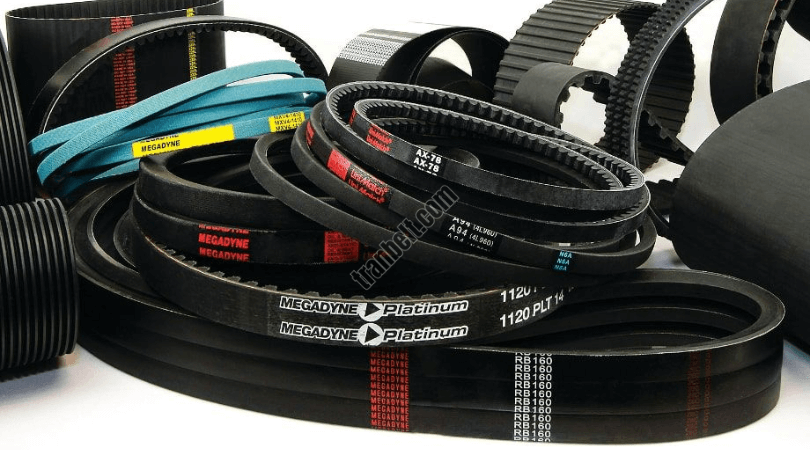
Have you ever had a machine suddenly stop working, or heard a terrible squealing noise from under the hood? You might have been dealing with a broken what is v belt! These simple rubber loops are the quiet heroes that keep fans, pumps, and engines spinning. Without them, your car or factory equipment just grinds to a halt. Frustrating, right? So, what exactly are these things, and why do they fail at the worst possible times?
Don’t worry! This guide is your easy fix. We’ll start by explaining what is v belt clearly, so you finally understand the simple idea behind it. Then, we’ll break down how a v belt works in plain language. After that, you’ll learn about the main types of v belts so you can pick the right one for your job. Finally, we’ll show where v belts are used in real life, from your garage to big factories. By the end, you won’t just be guessing—you’ll know exactly what to do
What Is a V Belt? Definition and Basic Concept
A V belt is a special kind of belt used to link two spinning parts, called pulleys, so they can work together. It helps move power from one part of a machine to another, making things like engines, fans, or factory machines run smoothly. Think of it like a strong rubber band that transfers energy to make parts turn. Its unique shape helps it grip the pulleys well, so it doesn’t slip easily.
The Simple Definition of a V Belt
A V belt is a tough, endless loop, usually made of rubber or other strong materials. Its main job is to connect two spinning wheels, or pulleys, in a machine to transfer power. It makes one wheel turn the other, similar to how a bicycle chain works, but it’s used for motors and engines in many different machines.
What Does a V Belt Look Like?
Imagine a thick rubber band, but instead of having flat sides, its sides are slanted, making it look like the letter “V” if you were to cut it in half. They are often black or dark in color and feel very sturdy. V belts come in many different sizes, from small ones for home appliances to large ones for big industrial equipment.
Why Is It Called a “V” Belt?
It’s called a “V” belt because of its unique shape. If you cut a V belt across, the end you see looks exactly like the letter “V”. This special V-shape allows the belt to fit snugly into the grooves of the pulleys, giving it a much better grip than a flat belt. This strong grip prevents slipping and helps the belt move power more efficiently.
How a V Belt Works
A V belt works by fitting into a special V-shaped ditch or groove on spinning wheels called pulleys. Its unique V shape allows it to wedge itself into these grooves. This tight fit helps the belt grab onto the pulleys firmly, making sure that power is moved smoothly from one spinning part of a machine to another without losing grip. It’s a very simple and strong way to make different parts of a machine work together.
The Role of the Pulley (Sheave)
Pulleys, sometimes called sheaves, are the round wheels that V belts run on. These pulleys are not flat; they have a V-shaped ditch or groove cut into their rim. This groove is designed to perfectly match the V shape of the belt. When the V belt sits in this groove, it gets wedged in, which is key to how it works. This tight fit helps the belt stay put and get a strong hold on the pulley.
How Power Gets Transferred
Power gets transferred when one pulley, connected to an engine or motor, starts to spin. As it spins, the V belt, which is wedged tightly in its groove, gets pulled along. Because the belt has such a good grip, it moves with the first pulley. This movement then causes the second pulley, where the belt is also wedged, to start spinning too. It’s like the first spinning wheel passes its energy directly to the second one through the belt.
Why V Belts Don’t Slip Easily
V belts don’t slip easily mostly because of their V shape and how they fit into the pulley’s groove. When the belt starts to pull, it gets pushed deeper into the V-shaped ditch of the pulley. This action, called “wedging,” creates a lot of friction on the sides of the belt, not just on the bottom. This strong side grip makes it very hard for the belt to slide or slip, even when there’s a lot of work being done or when machines are running fast.
Main Types of V Belts
V belts come in different types, and each one is made for a certain kind of work or machine. Picking the right type of V belt is really important to make sure your equipment runs smoothly, saves power, and lasts a long time. We will now look at the most common types of V belts you might find and what they are used for.
Classical V Belts (A, B, C, D, E)
These are the oldest and most common kinds of V belts you’ll see. They’re still used a lot today in many different machines. They come in standard sizes, and each size is given a letter, like A, B, C, D, or E. These letters tell you how wide and thick the belt is. Classical V belts are good for general use and work well in many everyday power transfer jobs.
Narrow V Belts (3V, 5V, 8V)
Narrow V belts are a newer and often stronger type of belt compared to the classical ones. They have a different shape that lets them carry more power while taking up less space. They are named with numbers like 3V, 5V, and 8V, which also show their size. These belts are great when you need a lot of power but don’t have much room for a bigger belt or want a more compact machine design.
Cogged V Belts
Cogged V belts have special cuts or notches on the inside part of the belt. These notches make the belt much more flexible, which means it can bend easily around smaller wheels (called pulleys) without getting too hot or stressed. This design helps the belt grip better and last longer, especially in machines that work hard or need to turn at high speeds.
Fractional Horsepower (FHP) V Belts
FHP V belts are made for machines that don’t need a lot of power. They are often found in smaller tools or home appliances, like washing machines, lawnmowers, or fans. These belts are usually lighter and made for less demanding jobs. They are a good and affordable choice for equipment that only needs a “fraction” of a horsepower to run.
Where V Belts Are Used
V belts are a big deal in lots of different machines we use every day. They help move power from one part of a machine to another, making things spin or work. You’ll find them in things as common as your family car, big heating and cooling systems in buildings, and even heavy machinery on farms and in factories. They’re good at their job because they grab onto pulleys really well and don’t slip much, making sure the power gets where it needs to go.
In Cars and Trucks
In your car or truck, V belts are really important. They connect the engine to other parts that need power. For example, a V belt can make the alternator spin, which charges your battery and powers your car’s electrical stuff. They also help run the power steering pump, which makes it easier to turn the wheel, and the air conditioner compressor, which keeps you cool in summer. Without these belts, many parts of your vehicle just wouldn’t work.
In HVAC and Air Conditioning Systems
Big buildings like offices, malls, and even homes often use V belts in their heating, ventilation, and air conditioning (HVAC) systems. These systems have large fans that push air around to heat or cool rooms. V belts connect the electric motor to these big fans, making them spin and move a lot of air. They also help run pumps in some of these systems. This makes sure the building stays at a comfortable temperature for everyone inside.
In Industrial and Farm Equipment
V belts are a workhorse in factories and on farms. In factories, you’ll see them in machines that move items on conveyor belts, power pumps that move liquids, or run big fans for ventilation. On farms, V belts are key for many machines. They’re in tractors, combine harvesters, and other farm equipment, helping to run different parts like blades, pumps, or sorting mechanisms. They’re built tough to handle the hard work these machines do every day.
How Does TranBelt Supply V-Belts and Kits from China?
When it comes to sourcing V-Belts and Kits from China, we at TranBelt make the process seamless, cost-effective, and reliable. We work directly with top global belt brands—including Bando, Continental, Gates, Megadyne, Mitsuboshi, and Optibelt—as their official distributor in China. This direct partnership allows us to offer lower agent prices while maintaining stable stock and fast supply. On top of that, we also own our factory, which gives us the flexibility to produce belts for different machines and special requirements. With factory production, we ensure better quality control and more competitive pricing, even for custom V-Belts and Kits. And because we cooperate with long-term shipping partners, both air and sea shipping are available. We help you choose the best shipping plan to save costs and receive goods safely and on time.
- Official distributor of top brands like Gates, Continental, and Optibelt for genuine, original belts.
- Our own factory enables custom production and strict quality control at factory-direct pricing.
- Long-term shipping partners offer flexible air and sea options for safe, on-time delivery.
Looking for a reliable belt supplier in China?
Contact TranBelt now for a fast quotation and professional support.
Frequently Asked Questions
1. What is a v belt used for?
A V belt is a rubber belt that helps machines work. It connects two parts, like pulleys, so they spin together. You see them in cars, lawn mowers, and fans. They help the engine run the alternator, water pump, and air conditioner.
2. How long does a v belt last?
Most V belts last between 3 and 5 years. It depends on how much you use the machine and how hot or cold it gets. If you drive a lot every day, the belt might wear out sooner. Check it every year to be safe.
3. How do I know if my v belt is worn out?
Look for cracks, frayed edges, or a shiny, glazed surface. If the belt feels loose or makes a squealing noise, it is worn out. Also, if you see rubber dust around the pulleys, that is a sign it is getting old.
4. Can I replace a v belt myself?
Yes, many people can do it at home. You just need a wrench and a new belt. But you have to be careful to route the belt the right way. If you are not sure, check a repair guide or watch a video. Always disconnect the power before you start.
5. What happens if a v belt breaks?
If a V belt breaks, the machine stops working. In a car, the battery light comes on, the engine might overheat, or the air conditioner stops blowing cold air. Do not drive the car with a broken belt because it can damage the engine.
6. Are v belts and fan belts the same thing?
Yes, they are the same thing. “Fan belt” is just another name for a V belt. People call it a fan belt because it often runs the cooling fan. But it can also run other parts like the alternator or power steering.
7. How do I choose the right v belt size?
Look at the old belt for numbers printed on it. Those numbers tell you the length and width. If you cannot read them, measure the old belt with a string or ruler. You can also ask a store worker to help match it. Getting the right size is very important, or the belt will not fit.
Conclusion
You’ve learned what is v belt, how it works, the main types, and where it’s used. Now you understand that V belts are simple but powerful—they transfer power from one machine part to another without slipping. The confusion and pain points are gone. You no longer have to wonder which belt fits your equipment or why your old belt keeps wearing out. You now have the basic knowledge to identify the right V belt for your job, so your machines run smooth and last longer.
Now it’s time to take action. Don’t waste time searching for unreliable parts or paying high prices. We can help you get the right belt fast and at a fair price. TranBelt works directly with top brands and also makes belts in our own factory. That means you get original quality or custom solutions, plus cheap shipping. If you need a trustworthy belt supplier in China, contact TranBelt today for a quick quote and easy support. Let’s solve your belt problem together!