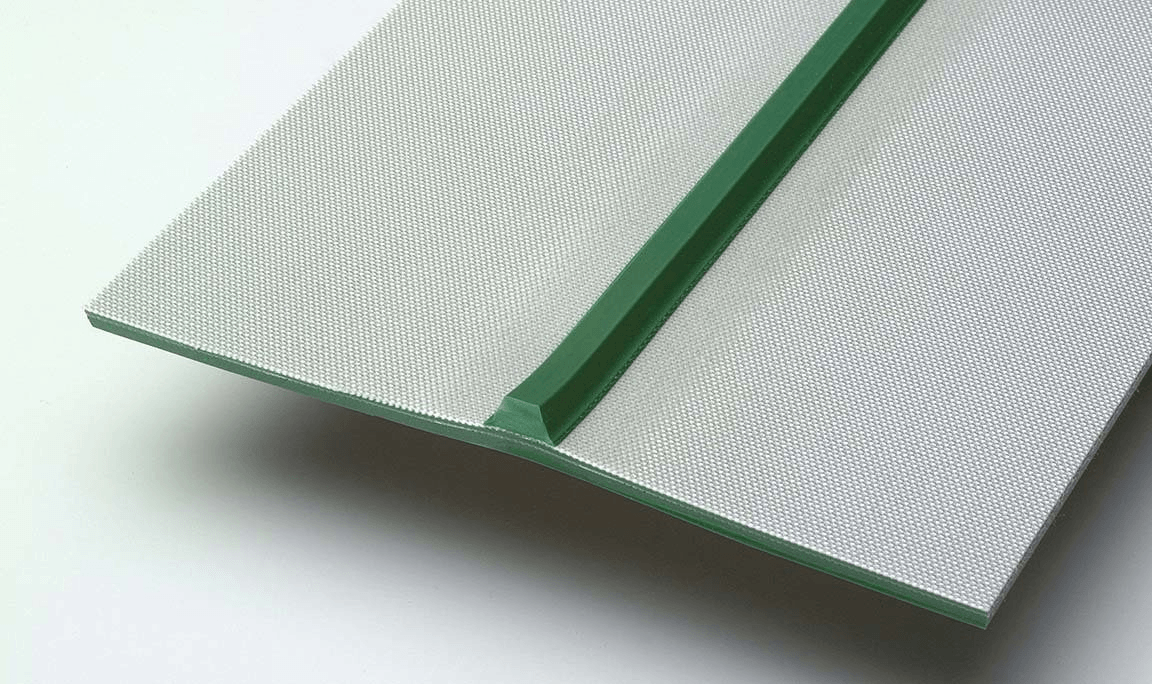
Have you ever watched your products slide off the line, pile up, or get damaged because your conveyor belt keeps wandering off track? It’s frustrating, right? You spend money on repairs, waste time on adjustments, and lose profit. Here’s the hard truth: a misaligned belt can cost you thousands in downtime. But what if there was a simple fix? For decades, the v guide conveyor belt has been the unsung hero that stops this nightmare cold. It’s like putting a train on a track – no more slipping, no more mess.
Don’t worry, you don’t need to be an engineer to understand this. This article will break down everything simply. First, we’ll cover What Is a V Guide Conveyor Belt? so you know exactly how it works. Next, we’ll explore the Types of V Guide Conveyor Belts to help you pick the right one for your job. Finally, we’ll show you the Top Applications of V Guide Conveyor Belts to get you excited about the possibilities. By the end, you’ll be ready to say goodbye to belt problems forever. Let’s dive in – it’s going to be a fun ride!
1. What Is a V Guide Conveyor Belt?
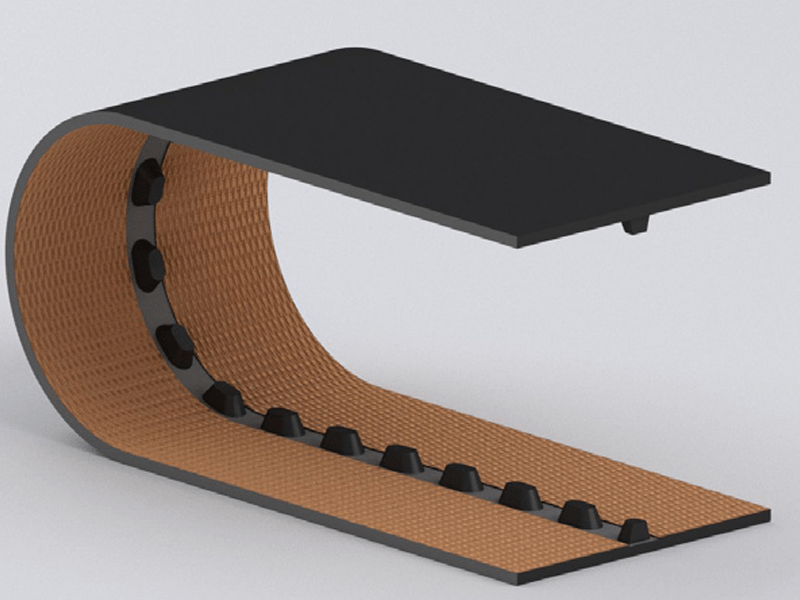
A V guide conveyor belt is a special kind of conveyor belt that has a raised “V” shape on its underside. Think of it like a ridge that runs along the middle of the belt. This V-shaped guide fits into grooves on the wheels (pulleys) or rollers of the conveyor system. Its main job is to keep the belt running straight and prevent it from sliding off to the side, making sure things move smoothly and correctly.
How the V Guide Works
The V-shaped part on the bottom of the belt fits perfectly into a matching groove on the conveyor’s rollers or pulleys. As the belt moves, this “V” acts like a train on a track. It guides the belt and stops it from wobbling or shifting left or right. This simple trick keeps the belt centered all the time, which is key for the conveyor system to work right.
Why Belt Tracking Matters
Making sure a conveyor belt stays in its proper place, also known as “belt tracking,” is super important. If a belt doesn’t track correctly, it can lead to big problems. The belt might wear out faster, or even break, causing the whole system to stop. This means you lose time and money. Also, if the belt isn’t straight, products on it could fall off, get damaged, or even mess up other parts of the machinery. Good tracking keeps everything working smoothly, lasts longer, and saves you from costly repairs.
2. Types of V Guide Conveyor Belts
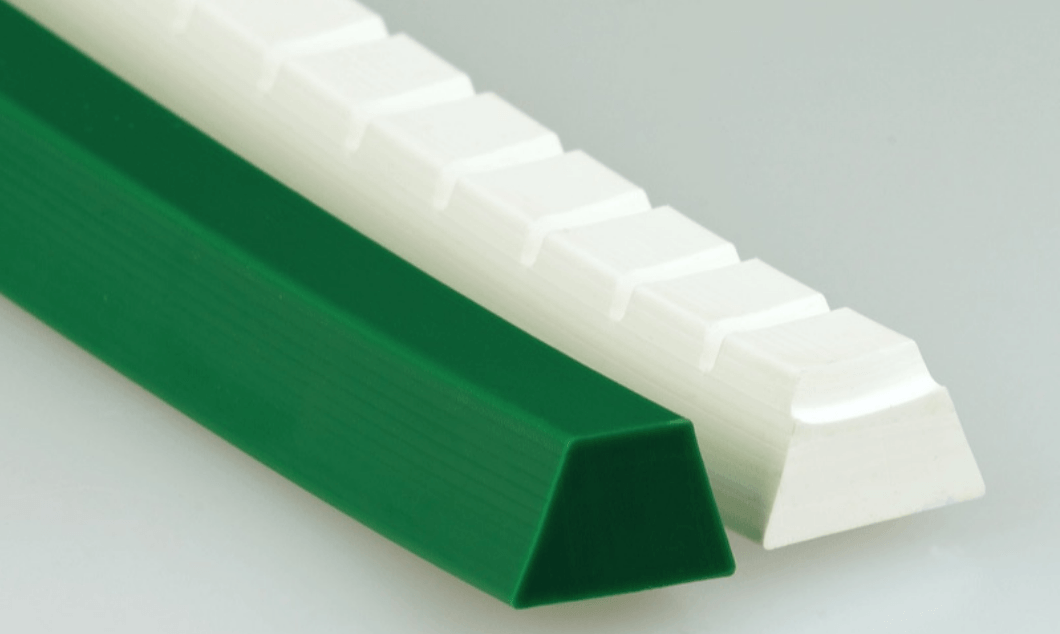
There are different kinds of V guide conveyor belts. Each type is made a special way to do certain jobs or work better in different places. Some belts are strong for heavy things, others can bend around tight corners, and some are easy to fix. Knowing the differences helps pick the right one for your needs.
Solid V-Guide
Solid V-guides are really tough belts. They are made in one continuous piece, meaning there are no breaks or cuts in their V-shape. This makes them super strong and durable. They are best for carrying very heavy items or for jobs where the belt needs to work hard all the time without breaking down.
Standard Notched V-Guide
Standard notched V-guides have small cuts, or “notches,” in their V-shape. These notches help the belt bend easier. Because they can bend more, these belts work really well on machines that have smaller wheels or pulleys. This helps the belt move smoothly even when it needs to turn.
Deep Notched V-Guide
Deep notched V-guides are like the standard ones, but their cuts are much deeper. These deeper cuts make the belt even more flexible. This extra bendiness means they can go around really sharp turns or follow paths that are tricky and have lots of curves without any problem.
Urethane Segmented V-Guide
Urethane segmented V-guides are made from many separate pieces, or “segments,” put together. They are usually made from a strong plastic called urethane. Because they are in pieces, they are very easy to put on or take off. This also makes them simple to fix or change if you need to adjust them for different jobs.
3. Top Applications of V Guide Conveyor Belts
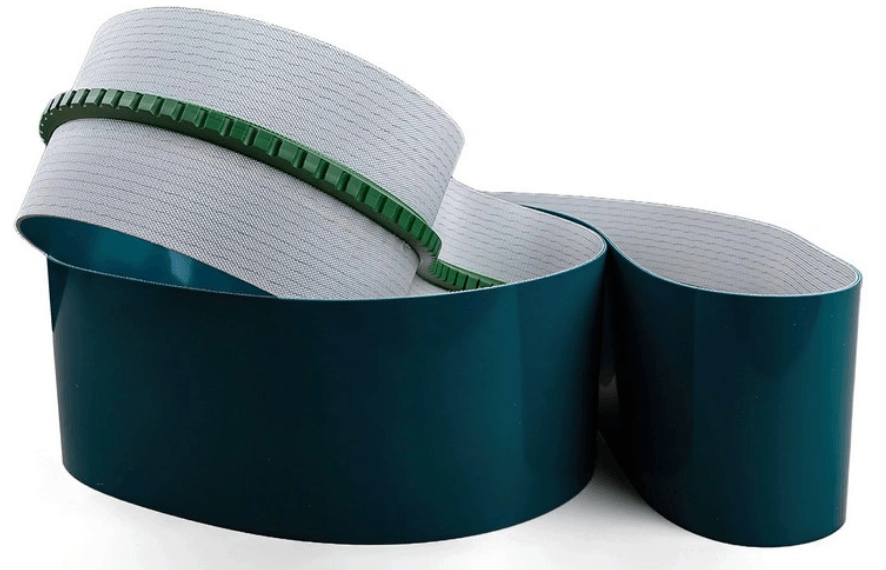
V guide conveyor belts are used in many places because they help belts run straight and smoothly. They are great for situations where a belt might easily move off track. Using V guide belts makes sure everything keeps working without problems, saving time and money in different businesses.
Long, Narrow & Wide Short Belts
Belts that are very long and thin, or short and wide, often have trouble staying in the right place. They can slip or move sideways. V guides are perfect for these kinds of belts. They help the belt stay centered and on track, which stops machines from getting jammed or materials from falling off.
Side-Loading and Unloading Systems
When items are put on or taken off a conveyor belt from the side, it can push the belt out of line. This can cause problems. V guides help the belt stay stable and centered, even when it gets pushed from the side. This keeps the material moving correctly and safely.
Reversing Belt Conveyors
Some conveyor belts need to move both forwards and backwards. This can be tricky because the belt might want to wander or go off track when it changes direction. V guides are very important here. They make sure the belt stays perfectly aligned, no matter which way it’s moving.
Agriculture, Industrial & Automotive Uses
V guide conveyor belts are used in many different jobs. On farms, they help move crops. In factories, they move parts along assembly lines. In car plants, they are key for making sure cars are built correctly. These belts help all these industries keep things moving smoothly and reliably, making sure work gets done right every time.
4. How Does TranBelt Supply Industrial Belts and Kits from China?
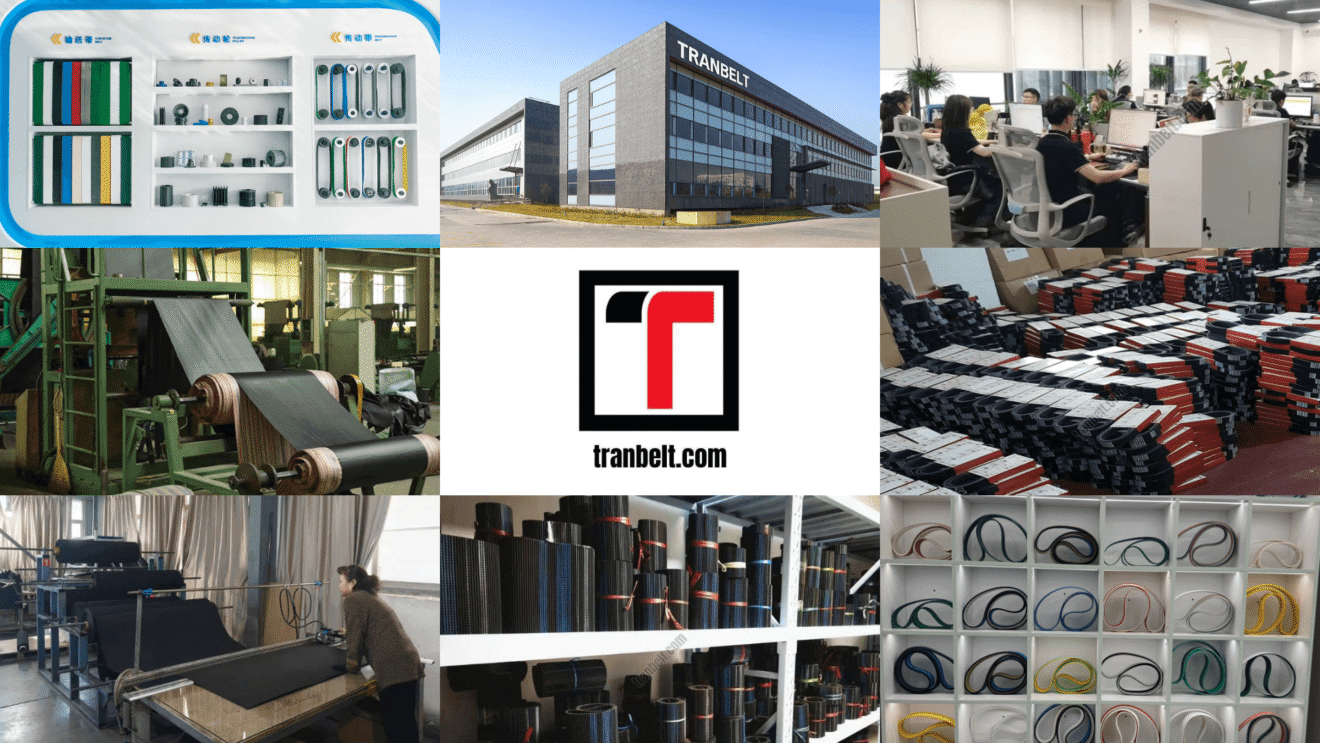
When you need Industrial Belts and Kits from China, we make the entire process simple, reliable, and cost-effective. We don’t just sell belts—we deliver complete drive solutions. By combining direct access to top global brands with our own factory capabilities, we ensure you get good products, good prices, and easy service every time. Let us walk you through exactly how we make it happen.
- We work directly with top global belt brands and are their official distributor in China. This means we offer you lower agent prices on original belts from industry leaders like Bando, Continental, Gates, Megadyne, Mitsuboshi, and Optibelt—with stable stock and fast supply.
- We also have our own factory, which allows us to produce belts for different machines and special needs. Factory production gives us better quality control and more competitive pricing, including custom belts tailored to your exact specifications.
- We cooperate with long-term shipping partners to offer both air and sea shipping. We help you choose the best shipping plan to save costs while ensuring your goods arrive safely and on time.
Looking for a reliable belt supplier in China?
Contact TranBelt now for a fast quotation and professional support.
5. Frequently Asked Questions
1) What does a V guide do on a conveyor belt?
A V guide is a strip that runs down the middle of the belt. It fits into a groove on the pulley. This keeps the belt from sliding side to side. It helps the belt stay straight and run smooth.
2) What materials are V guides made from?
Most V guides are made from rubber or plastic. Some are made from urethane, which is strong and lasts a long time. The material depends on what kind of stuff the belt carries.
3) What sizes do V guides come in?
V guides come in many sizes. They are measured by width and height. Common sizes are small ones for light belts and big ones for heavy belts. You can pick the size that fits your pulley groove.
4) Can V guides be added to any existing belt?
Yes, you can add a V guide to most belts. But the belt needs to be wide enough. If the belt is too narrow, the guide might not fit. A worker can weld or glue the guide onto the belt.
5) Do V guides go on the top or bottom of the belt?
V guides go on the bottom of the belt. The bottom is the side that touches the pulley. The top of the belt stays flat for carrying things.
6) Can V guides fix a poorly designed conveyor?
No, V guides cannot fix a bad design. If the frame is bent or the pulleys are not lined up, V guides will not help. You have to fix those problems first. V guides just help keep the belt straight.
7) How do V guides extend belt life?
V guides stop the belt from rubbing against the sides of the conveyor. This rubbing can wear out the belt fast. By keeping the belt centered, V guides help it last longer. The belt also takes less damage from slipping.
6. Conclusion
You now know exactly what a v guide conveyor belt is, the different types available, and where they work best. We have covered the main pain points of tracking issues, misalignment, and product spillage. By now, most of your worries about keeping your belt straight and running smoothly should be gone. You understand how these belts solve problems in factories, warehouses, and even food processing lines. Your choice is now clear, and you can move forward with confidence.
So, what is your next step? Do not wait. Let TranBelt help you get the right v guide conveyor belt for your job. We work with top global brands and have our own factory, so you get good quality, fair prices, and easy service. We handle shipping by air or sea to save you money and time. You deserve a reliable partner. Contact TranBelt now for a fast quote and professional support. Solve your problem today