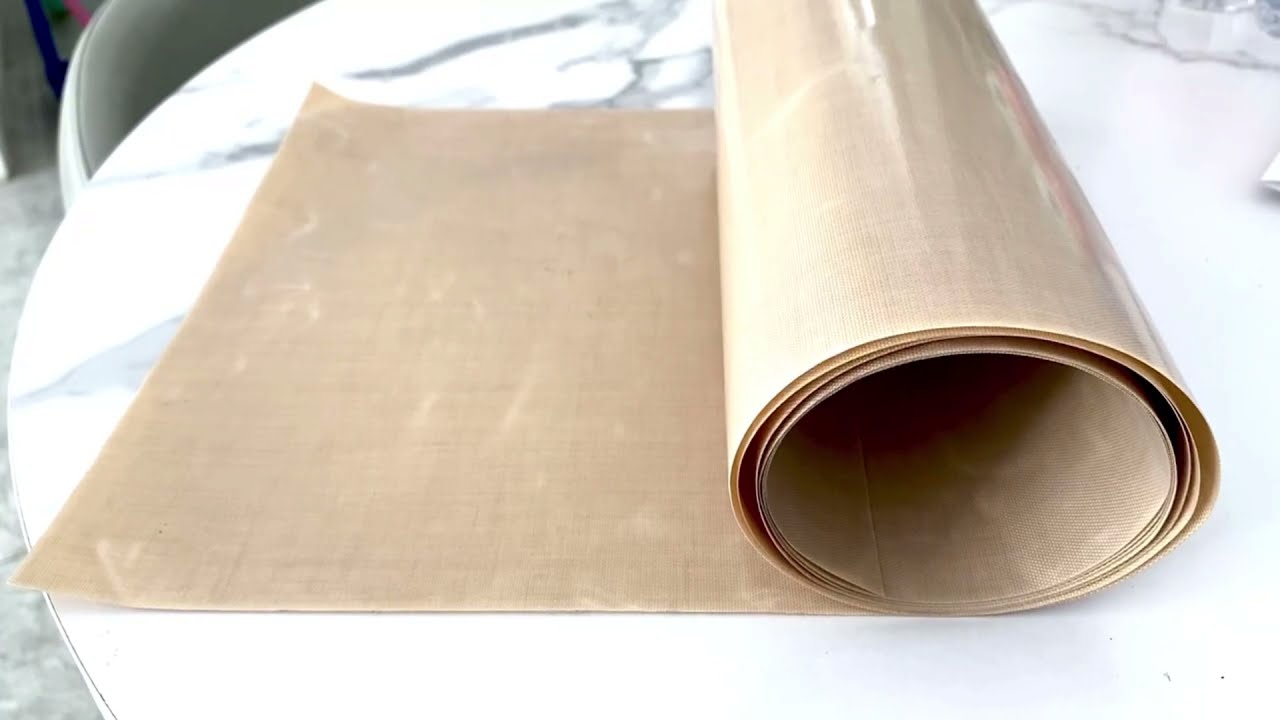
If you work in manufacturing, packaging, or food processing, you’ve probably run into a teflon conveyor belt before. These belts are made from PTFE-coated fiberglass, and they offer great heat resistance, non-stick properties, and real durability in tough industrial settings. In this guide, we’ll break down what makes them special, where people use them, and how to pick the right one for your operation in 2026.
1. What Is a Teflon Conveyor Belt?
A Teflon conveyor belt is an industrial belt made by coating woven fiberglass fabric with PTFE (polytetrafluoroethylene) — better known by the brand name Teflon. This combo gives you a belt that’s highly heat-resistant, chemically inert, and non-stick. You’ll typically find Teflon belts in two main styles: open mesh and solid (non-porous). Mesh lets air flow through, which helps during drying or cooling. Solid belts work better when you need a smooth, sealed surface.
The base fabric is usually fiberglass because it holds up well under heat and keeps its shape. The PTFE coating is what gives the belt its release properties and resistance to just about any chemical you’d throw at it. That’s why it’s so popular in industries where hygiene and performance both matter.
2. Key Properties and Benefits
Teflon conveyor belts bring a lot to the table compared to standard rubber or PVC belts.
- Heat Resistance: They handle continuous temperatures from -70°C to +260°C without breaking a sweat. Some grades can even take up to 315°C in short bursts. That makes them a go-to for high-heat jobs.
- Non-Stick Surface: PTFE’s low friction means sticky stuff like adhesives, resins, and food products release cleanly. Less buildup, less waste.
- Chemical Resistance: These belts shrug off acids, alkalis, solvents, and other harsh chemicals. Perfect for nasty environments.
- Flexibility and Strength: The fiberglass base gives them solid tensile strength while still letting them bend around small pulleys.
- Hygiene and Cleanability: Food-grade Teflon belts are non-toxic, odorless, and easy to wipe down. They help facilities meet FDA and EU food safety standards.
- Long Service Life: Treat them right and they’ll outlast most other belt types. That means less downtime and fewer replacements.
3. Common Applications and Industries
You’ll find Teflon conveyor belts in more places than you might expect.
- Food Processing: They’re in ovens, freezers, fryers, and drying tunnels for things like baked goods, snacks, frozen foods, and meat. The non-stick surface keeps food from sticking and makes cleanup simple.
- Packaging: Heat-sealers, shrink-wrap tunnels, and packaging lines depend on Teflon belts for their heat stability and release properties.
- Textiles: Used in fabric drying, curing ovens, and screen-printing dryers where consistent heat matters.
- Electronics and Solar: Soldering and reflow ovens for PCBs use Teflon mesh belts to move components through precise temperature profiles.
- Chemical Processing: These belts carry materials through chemical baths, drying stages, and curing ovens without breaking down or causing contamination.
- Composites and Laminating: Think laminate flooring, composite panels — anywhere heat and pressure get applied over and over.
- Printing: UV curing conveyors and ink drying systems rely on PTFE belts to perform consistently under heat.
4. PTFE Mesh vs Solid Teflon Belts
The choice between mesh and solid really comes down to what your process needs.
PTFE Mesh Belts: These have a woven open structure that lets air, moisture, and heat pass right through. They’re the top pick for drying, cooling, and baking jobs where airflow is key. Open area usually ranges from 50% to 80%, so you can pick based on how much circulation you need. Mesh belts also bend nicely around small pulleys.
Solid Teflon Belts: Also called PTFE coated solid belts, these have a continuous smooth surface. Go with these when your product needs a flat, unbroken surface — like in sealing stations, laminating presses, or when small parts might slip through mesh openings. Solid belts release sticky coatings better and are easier to wipe clean.
It’s pretty simple: do you need airflow through the belt or a solid surface? That’ll tell you which way to go.
5. How to Choose the Right Teflon Conveyor Belt
Picking the right belt takes some thought. Here’s what to look at.
1. Temperature Range: Figure out your max operating temperature. Standard PTFE belts handle up to 260°C continuously. If you need more, look into high-temperature grades.
2. Belt Type: Mesh or solid? Mesh for drying and cooling. Solid for sealing and smooth conveying.
3. Tensile Strength and Thickness: Heavier loads need thicker fabric and higher tensile ratings. Check the manufacturer’s load charts for your setup.
4. Chemical Exposure: Make sure the belt can handle any chemicals, oils, or solvents it’ll come across.
5. Food Safety Certification: For food contact, confirm the belt meets FDA 21 CFR 177.1550 or EU 1935/2004 standards.
6. Pulley Diameter: Teflon belts need a minimum pulley size to avoid creasing and wear. Smaller pulleys call for more flexible weaves.
7. Joining Method: You can get alligator lacing, crocodile lacing, or endless (seamless) joints. Endless belts run smoother but need custom manufacturing.
Talk to a reputable PTFE belt supplier early on. It’ll save you time and money.
6. Frequently Asked Questions
1) What temperature can a Teflon conveyor belt handle?
Standard PTFE belts handle continuous temperatures from -70°C up to 260°C. Some specialized belts can take intermittent exposure up to 315°C. Always double-check the specs for your exact model.
2) Are Teflon conveyor belts food safe?
Yes. Food-grade Teflon belts meet FDA and EU standards for direct food contact. They’re non-toxic, odorless, and won’t mess with the flavor or safety of your food. You’ll see them a lot in baking, frying, and freezing lines.
3) How do you clean a Teflon conveyor belt?
Pretty easy thanks to the non-stick surface. Mild soap and warm water with a soft brush usually does the trick. For tougher residue, try isopropyl alcohol or other mild solvents. Stay away from abrasive pads or metal scrapers — they can damage the PTFE coating.
4) What is the difference between PTFE and Teflon conveyors?
Nothing, really. Teflon is just the brand name owned by Chemours (formerly DuPont) for PTFE (polytetrafluoroethylene). In the conveyor belt world, people use the terms interchangeably. PTFE is the chemical name, Teflon is the brand.
5) How long does a Teflon conveyor belt last?
It depends on how you use it. With proper installation and maintenance, a good Teflon belt can last anywhere from 6 months to 5 years or more. Key factors: temperature consistency, load levels, chemical exposure, and belt tracking. Check it regularly to get the most life out of it.
6) Can Teflon belts be repaired?
Minor issues like edge fraying can sometimes be patched up with PTFE repair tape or re-lacing. But major tears or coating damage usually mean it’s time for a replacement. Endless (seamless) belts are harder to fix than laced ones.
7) What industries use Teflon conveyor belts the most?
Food processing and packaging top the list. Other big users include electronics manufacturing (reflow ovens), textiles, chemical processing, printing, and composite materials.
8) Do Teflon belts need tensioning?
Yes, tension matters a lot. Too little and the belt slips or tracks poorly. Too much and you could stretch or damage the fabric. Follow the manufacturer’s guidelines and check alignment now and then.
7. Conclusion
The teflon conveyor belt is still a key player across manufacturing, packaging, and food processing. It’s got that unique mix of heat resistance, non-stick surface, chemical durability, and flexibility that makes it such a popular choice for tough conveying jobs. Once you understand the mesh vs solid difference, figure out your process needs, and pick the right grade and joining method, you’ll boost your productivity and cut down on downtime. As industrial processes keep evolving in 2026, PTFE conveyor belts aren’t going anywhere. They’ll stay a staple on the production line for years to come.