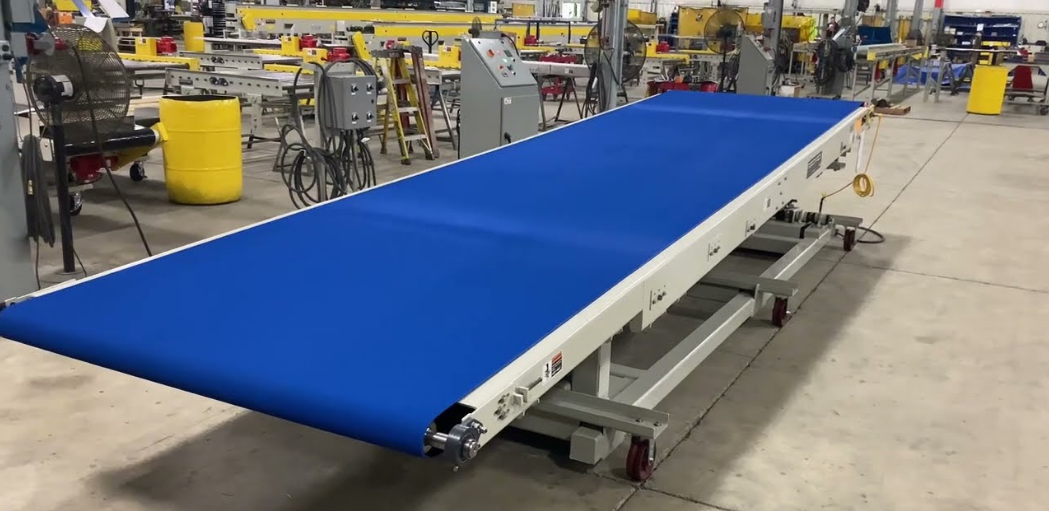
When you need to move products up an incline without them sliding backward, a rough top conveyor belt is often the most practical solution. Smooth belting relies on friction alone — these belts use a patterned raised surface to grip items from underneath. This guide covers everything: common surface patterns, belt materials, real-world applications, and practical selection tips. You’ll learn how to choose the right incline belt for your warehouse, factory, or material handling operation in 2026.
1. What Is a Rough Top Conveyor Belt?
A rough top conveyor belt is a type of conveyor belting with a textured raised surface designed to prevent items from slipping during transport. The textured top layer — typically made from PVC or rubber — bonds to a durable carcass that provides tensile strength and tracking stability.
The real difference between a rough top belt and a standard smooth belt is the surface profile. Smooth belts rely entirely on the weight of the product and the coefficient of friction between the belt and the item. Rough top belts add mechanical grip: the raised pattern digs into the bottom of boxes, bags, or parts, holding them in place even on inclines.
Rough top belts sit between smooth belts and cleated belts in the grip spectrum. They offer more grip than smooth belting without the complexity and cost of adding cleats. That’s why they’re a top choice for moderate incline applications in warehouses, factories, and distribution centers.
2. Key Benefits and Advantages
- Anti-slip grip on inclines: Prevents rollback of boxes, bags, and parts on slopes up to 35 degrees
- Cushions fragile items: The textured surface absorbs vibration and reduces impact during transit
- Works for both incline and decline conveying: Effective in both directions, unlike some specialized belt types
- Compatible with various belt materials: Available in PVC, rubber, and polyurethane to match different environments
- Reduces need for side guides or cleats: In moderate incline applications, the surface grip alone is sufficient, saving cost and simplifying maintenance
3. Common Surface Patterns
- Diamond Pattern: The most common general-purpose rough top. Provides reliable grip for mixed product types on moderate inclines up to 25-30 degrees. Suitable for boxes, cartons, and packaged goods.
- Herringbone / Chevron Pattern: Directional grip ideal for steeper inclines up to 35 degrees. The angled ridges channel material and water away from the contact surface. Best for heavy or awkward loads.
- Raised Button / Round Knob: Lightweight grip that’s gentle on delicate products. Commonly used in food handling and light packaging applications where marring the product surface matters.
- Fine Rough Top: A subtle texture for mild grip needs. Suitable for slow-speed or low-angle inclines where minimal grip enhancement is sufficient.
The right pattern depends on your incline angle, the types of products you handle, and the conditions the belt will operate in. Diamond is the safe default. Chevron is for steeper slopes. Button and fine patterns are for gentler handling.
4. Industries and Applications
- Package Handling / Logistics: Moving boxes and parcels up inclines in sorting facilities and shipping hubs
- Agriculture: Conveying bags of feed, grain, and produce up inclines during loading and processing
- Manufacturing: Feeding parts and components between machines at different heights along the production line
- Food Processing: Incline transport of packaged food items where you need both gentle handling and grip
- Recycling / Waste: Moving bags and loose materials on inclines in sorting and processing facilities
- Warehousing / Distribution: Loading and unloading at dock levelers, mezzanines, and multi-level storage systems
5. How to Choose the Right Rough Top Conveyor Belt
- Incline Angle: The steeper the incline, the more aggressive the surface pattern you’ll need. Diamond for moderate slopes, chevron for steep.
- Product Type: Fragile items need a gentler pattern such as fine or button. Heavy boxes need aggressive grip from diamond or chevron.
- Belt Material: PVC suits general use and dry conditions. Rubber performs better in wet, oily, or high-temperature environments.
- Surface Pattern: Match the pattern to the product and incline angle as described in Section 3.
- Operating Environment: Consider moisture, temperature, dust, and chemical exposure when choosing between PVC and rubber compounds.
- Load Weight: Heavier loads require thicker belts with higher tensile strength to prevent stretching and sagging.
- Width and Length: Must match the conveyor frame dimensions and the full path the belt needs to travel.
6. Frequently Asked Questions
1) What is the maximum incline angle for a rough top conveyor belt?
Most rough top belts work effectively at inclines up to 25-35 degrees, depending on the surface pattern. Diamond pattern handles up to 25-30 degrees. Herringbone or chevron can reach 35 degrees. For steeper inclines, you’ll need a cleated belt instead.
2) What is the difference between rough top and cleated conveyor belts?
Rough top belts use a textured surface for grip and work well for moderate inclines with stable products. Cleated belts have raised vertical barriers that physically stop items from sliding. You’ll need them for steep inclines over 35 degrees or loose materials that would roll on a textured surface alone.
3) Can rough top belts handle wet or oily conditions?
Yes, but rubber rough top belts handle wet and oily conditions better than PVC. Choose oil-resistant rubber compounds if the belt touches oils or grease. PVC rough top works best in dry applications where moisture isn’t an issue.
4) How do you clean a rough top conveyor belt?
Use a stiff brush and mild detergent to clean the surface. Don’t use metal scrapers — they’ll damage the raised pattern. For food-grade applications, use approved sanitizers. Regular cleaning prevents buildup in the textured grooves and extends belt life.
7. Conclusion
A rough top conveyor belt is a smart, budget-friendly solution for moving products on inclines without slippage. Its textured surface provides the grip needed to keep boxes, bags, and parts in place while remaining gentle enough for fragile items. The trick is matching the surface pattern, belt material, and belt dimensions to your specific incline angle and product type. Whether you run a warehouse, a food processing line, or a recycling facility, choosing the right rough top conveyor belt will improve throughput and reduce downtime from product rollback.