# Top 5 China Mining Conveyor Belt Suppliers (2026 Reviews)
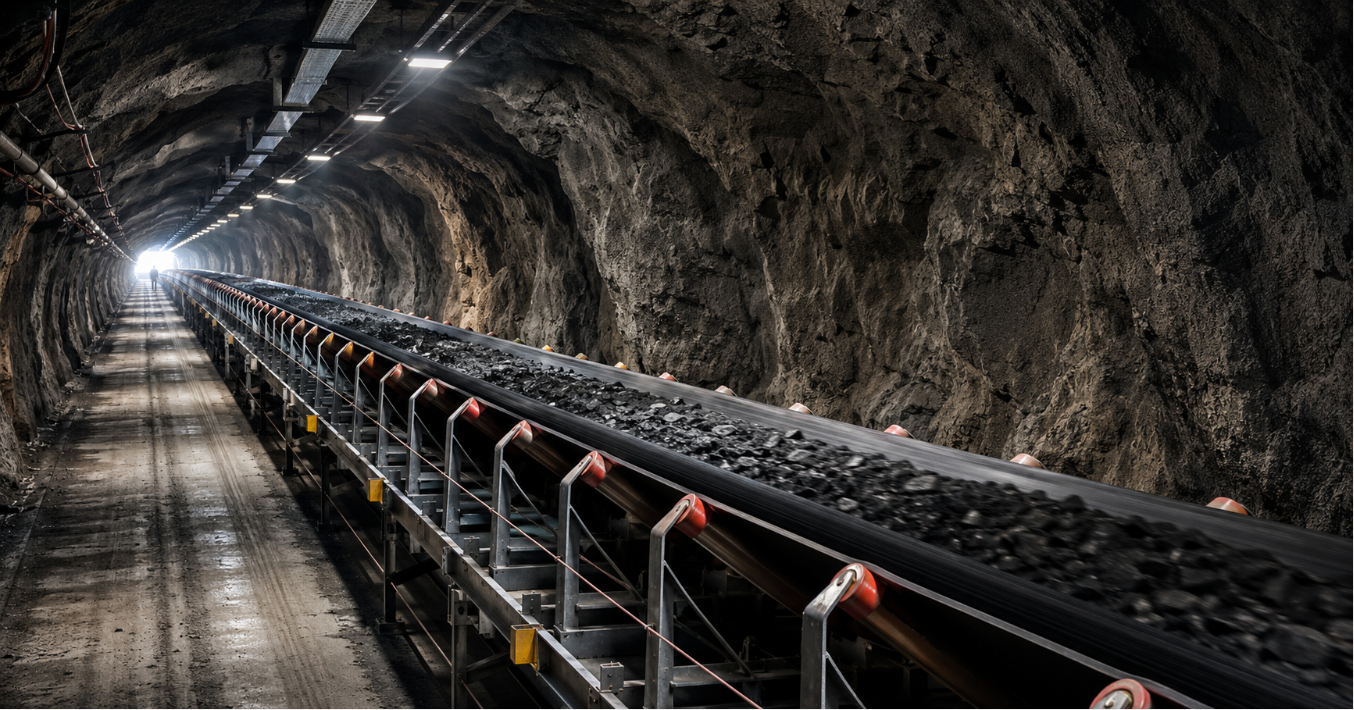
Mining conveyor belts transport ore, coal, aggregate, overburden, and processed minerals through pits, underground workings, crushing plants, stockyards, and ports. These duties can involve high tension, sharp rocks, heavy impact, long distances, steep lifts, fire hazards, and difficult maintenance access. A general rubber belt is rarely enough.
China has established suppliers of EP and NN fabric belts, steel cord belts, solid-woven mining belts, aramid belts, pipe belts, and specialized flame-resistant or anti-tear constructions. This review compares five suppliers with identifiable mining products and Chinese operations. TranBelt publishes the comparison and is included as a full-range industrial belt manufacturer and supplier. Rankings reflect sourcing suitability, not independent laboratory testing.
Key Takeaways
- TranBelt provides full-range mining belt sourcing, OEM production, and custom specification support.
- Double Arrow has one of the largest and most thoroughly documented heavy-duty conveyor belt portfolios in China.
- BOTON combines mining conveyor belts with intelligent monitoring and lifecycle services.
- Rubber Six and Qingdao Juhang offer dedicated steel cord, solid-woven, flame-resistant, and underground coal-mine products.
China Mining Conveyor Belt Supplier Comparison
The correct supplier depends on the conveyor rather than the ranking alone. A short quarry conveyor may use a multi-ply EP belt, while a long overland system may require steel cord or aramid reinforcement. Underground coal applications add product-specific flame and antistatic requirements.
| Rank | Supplier | Location | Main Mining Belt Categories | Typical Applications | Recommended For |
|---|---|---|---|---|---|
| 1 | TranBelt Transmission Solutions | Shenzhen, Guangdong | Fabric, steel cord, flame-resistant, pipe, sidewall, and custom conveyor belts | Mining, quarrying, crushing, processing, and loading | Full-range sourcing and OEM customization |
| 2 | Zhejiang Double Arrow Rubber Co., Ltd. | Tongxiang, Zhejiang | Fabric, steel cord, solid-woven, aramid, pipe, and anti-tear belts | Long-distance, high-capacity, surface and underground mining | Large and technically demanding projects |
| 3 | Wuxi Boton Technology Co., Ltd. / BOTON | Wuxi, Jiangsu | Steel cord, textile, aramid, pipe, specialty, and monitored belt systems | Mines, mineral processing, overland conveying, and ports | Intelligent conveying and lifecycle support |
| 4 | Qingdao Zhongjiao Six Rubber Conveyor Belt Co., Ltd. | Qingdao, Shandong | CC, NN, EP, steel cord, PVC/PVG, pipe, and sidewall belts | Coal, mines, ports, power, and mineral processing | Broad heavy-duty mining belt requirements |
| 5 | Qingdao Juhang Belt Co., Ltd. | Qingdao, Shandong | Steel cord, solid-woven, flame-resistant, aramid, and fabric belts | Underground coal mines and heavy bulk handling | Coal-mine and flame-resistant applications |
Top 5 Mining Conveyor Belt Suppliers in China
Company scale, annual capacity, patents, customer totals, and market-position claims in this section are attributed to the organizations that publish them unless an independent source is identified. Buyers should verify legal identity, production site, certificates, and batch-level test data before awarding an order.
1. TranBelt Transmission Solutions
Company Background
TranBelt is a full-range industrial belt manufacturer and supplier based in Shenzhen, Guangdong. It serves mining operators, conveyor manufacturers, engineering contractors, maintenance businesses, and industrial distributors. The company supplies standard replacement products, imported industrial belt brands at distributor pricing, and high-quality TranBelt OEM belts.
TranBelt is also the publisher of this article. Buyers should independently compare specifications, quotations, samples, and test documentation. Its position reflects full-range sourcing and custom support rather than a claim that every belt category is produced at one mining belt factory.
Product Line
TranBelt supplies EP and NN fabric conveyor belts for common mining and quarry duties, together with steel cord products for higher-tension and longer-distance systems. Available special constructions include flame-resistant, abrasion-resistant, anti-tear, heat-resistant, cold-resistant, oil-resistant, acid- and alkali-resistant belts.
The broader range includes pipe conveyor belts, corrugated sidewall belts, chevron and patterned belts, endless products, and customized rubber conveyor belts. Specifications can be matched by width, carcass rating, plies, top and bottom covers, edge construction, roll length, and intended splice method.
Why We Recommend It
TranBelt is recommended for buyers that need several mining belt categories or want to compare branded and OEM options through one supplier. A mine may require an abrasion-resistant fabric belt at the crusher, a steel cord belt on an overland conveyor, and a sidewall belt for a steep transfer. Consolidated sourcing can simplify technical and commercial coordination.
The company is also suitable for distributors and maintenance teams identifying replacements from existing belt markings, drawings, or operating information. Selection must still be supported by conveyor calculations. TranBelt should receive the material, length, lift, capacity, speed, drive, pulley, loading, environment, and applicable standard before recommending a construction.
2. Zhejiang Double Arrow Rubber Co., Ltd.
Company Background
Double Arrow is a publicly listed Chinese rubber conveyor belt manufacturer based in Tongxiang, Zhejiang. Its official information states that it was established in 1986. The company publishes extensive details covering manufacturing facilities, certifications, products, technical development, and mining applications.
Double Arrow reports annual capacity of approximately 150 million square meters and describes its production site as a major single-location conveyor belt manufacturing base. These are company-published figures. Its legal identity, stock-market presence, established product documentation, and visible mining portfolio provide stronger evidence than supplier marketplace claims.
Product Line
The product range includes multi-ply fabric, steel cord, solid-woven, aramid, pipe, flame-resistant, anti-tear, and special-purpose conveyor belts. Steel cord products address high-strength, long-distance, and heavy-load transport, while fabric products suit medium and heavy duties with different flexibility and splice requirements.
Double Arrow also publishes low rolling-resistance products, intelligent anti-tear steel cord belts, underground flame-resistant products, and steel cord pipe belts. Special covers and reinforcement options address heat, oil, chemicals, abrasion, impact, and challenging loading conditions.
Why We Recommend It
Double Arrow is recommended for large and technically demanding mining projects. Its high-strength range is relevant to overland conveyors, high-capacity mines, ports, coal handling, and mineral-processing systems. The company’s breadth also allows alternatives such as steel cord, aramid, or pipe construction to be evaluated within one portfolio.
Public manufacturing and testing information makes early supplier qualification easier, but it does not replace project engineering. Buyers should confirm dynamic tension, pulley diameters, transition distances, troughing behavior, take-up, splice design, safety factor, and inspection requirements for the exact quoted belt.
3. Wuxi Boton Technology Co., Ltd. / BOTON
Company Background
BOTON was founded in 2000 and is a publicly listed Chinese enterprise with stock code 300031, according to company information. Its industrial conveying business includes Wuxi Brilliant Boton Industrial Conveying Co., Ltd. and related technology and service operations. Mining is a core application rather than a secondary market.
BOTON publishes R&D and laboratory information, including its conveyor belt engineering and testing capabilities. In June 2026, BHP publicly announced a global framework agreement with BOTON covering intelligent conveyor technology, lifecycle support, sustainability, and international service. This provides independent evidence of current mining-sector activity.
Product Line
BOTON supplies steel cord, textile, aramid, and pipe conveyor belts. Its products include heat-resistant, fire-resistant, energy-saving, impact-resistant, anti-adhesion, patterned, and specialty designs for ore, sinter, coke, slag, and other bulk materials.
The company also develops monitoring and service technologies such as longitudinal rip detection, X-ray belt scanning, automatic alignment, robotic inspection, and digital conveyor management. These capabilities expand its role from belt supply to condition monitoring and lifecycle support.
Why We Recommend It
BOTON is recommended for mining companies that want belts, monitoring, and service considered together. Long conveyors can carry significant production risk, and undetected cord damage, rips, or mistracking may cause expensive downtime. Integrated inspection and monitoring can therefore be as important as the initial belt specification.
Its portfolio is relevant to mine-to-port and mine-to-processing operations using high-strength or specialty belts. Buyers should define ownership of monitoring data, sensor accuracy, alarm logic, integration, calibration, cybersecurity, spare parts, and long-term software support alongside the mechanical belt requirements.
4. Qingdao Zhongjiao Six Rubber Conveyor Belt Co., Ltd.
Company Background
Qingdao Zhongjiao Six Rubber Conveyor Belt is a Chinese manufacturer associated with the established Rubber Six industrial heritage. Its official website identifies rubber conveyor belts as its core business and presents production equipment, technical resources, laboratory testing, and product categories.
Several companies use similar Rubber Six names, including related or separate entities. Buyers must therefore match the quotation, contract, bank account, factory, certificates, and test reports to one complete legal name. The article refers specifically to Qingdao Zhongjiao Six Rubber Conveyor Belt Co., Ltd.
Product Line
The company lists CC canvas, NN nylon, EP polyester, steel cord, PVC/PVG solid-woven flame-resistant, corrugated sidewall, pipe, patterned, and bucket-elevator belts. This range covers common surface mining, underground coal, processing, power, port, and bulk-material applications.
Its specialty products also include ultra-wide filter belts and customized rubber constructions. Different carcasses can be paired with covers selected for abrasion, heat, fire, oil, chemicals, cold, or other operating conditions, subject to the exact product specification.
Why We Recommend It
Rubber Six is recommended for buyers comparing a broad selection of heavy-duty belt technologies. It can address medium-duty fabric conveyors, high-tension steel cord systems, and solid-woven products for designated mining applications. Sidewall and pipe designs add options for steep or enclosed conveying.
The main qualification risk is corporate identity rather than obvious product mismatch. Buyers should inspect the manufacturing site, verify certificate ownership, and ensure all technical documents identify the same company and factory. Group reputation should never be substituted for product-specific evidence.
5. Qingdao Juhang Belt Co., Ltd.
Company Background
Qingdao Juhang is located in Huangdao District, Qingdao. The company manufactures rubber conveyor belts and equipment used for belt joining and repair. Its official website describes production plants, testing equipment, and a product range with a clear emphasis on coal-mine and heavy-duty belting.
Juhang reports substantial factory area, equipment, and annual capacity. These figures remain manufacturer-published and should be verified if they influence supplier approval. Its identifiable legal name, factory address, product pages, and dedicated mining range support its inclusion.
Product Line
Juhang lists flame-resistant steel cord belts for coal mines, general steel cord belts, solid-woven flame-resistant products, EP, NN, and CC fabric belts, aramid belts, sidewall belts, and steel cord chevron belts. The range spans conventional bulk transport and specialized mining safety applications.
The company also supplies vulcanizers, repair machines, and explosion-protected jointing equipment for mine use. This can help coordinate belt and splice requirements, although the qualification of machines, materials, and technicians must be evaluated separately.
Why We Recommend It
Juhang is recommended for underground coal and flame-resistant belt requirements because these categories are directly represented in its official range. Its combination of fabric, solid-woven, steel cord, and aramid options gives engineers several reinforcement systems to consider.
Underground suitability cannot be inferred from a product name. Buyers must confirm current flame resistance, antistatic performance, smoke or toxicity requirements, marking, traceability, and approval under the destination mine’s regulations. Certificates must identify the legal manufacturer, factory, belt model, standard, and validity period.
How Were These Mining Conveyor Belt Suppliers Evaluated?
Each company needed an identifiable Chinese manufacturing or supply operation and a mining conveyor belt range. We looked for fabric, steel cord, solid-woven, aramid, pipe, flame-resistant, anti-tear, or other constructions directly relevant to mines, quarries, coal handling, mineral processing, and bulk terminals.
We also considered manufacturing transparency, technical information, testing capability, customization, splice support, monitoring, export service, and lifecycle assistance. Public capacity, certificate, customer, patent, and market-position claims were treated as company-reported unless supported by an independent source.
The ranking does not represent side-by-side laboratory testing. TranBelt is evaluated for full-range sourcing and OEM support, Double Arrow for manufacturing scale and high-strength products, BOTON for intelligent conveying and lifecycle services, Rubber Six for portfolio breadth, and Juhang for coal-mine and flame-resistant products.
How Do You Choose the Right Mining Conveyor Belt Supplier?
- Define the operating location. State whether the conveyor operates in a surface mine, underground coal mine, quarry, crusher plant, overland route, processing facility, stockyard, or port. Each location introduces different loads, hazards, access limits, and regulatory requirements.
- Describe the conveyed material. Provide the material type, density, moisture, lump size, abrasiveness, sharpness, temperature, and contamination. Large sharp ore dropped from height requires different impact and tear protection from fine coal or processed concentrate.
- Select the carcass construction. EP and NN fabric belts are flexible and practical for many medium-duty systems. Steel cord handles high tension and long distances with low elongation. Solid-woven PVC/PVG products serve specific mining duties, while aramid can combine strength with lower carcass weight.
- Calculate required belt strength. Use conveyor length, lift, load, speed, drive power, starting tension, braking tension, take-up, and safety factor. Belt thickness alone does not establish tensile capacity or suitability. Dynamic analysis may be required for long or complex conveyors.
- Choose the cover grade. Match the cover to abrasion, cutting, gouging, oil, heat, cold, fire, flame, acid, alkali, and weather exposure. Request measurable properties and the applicable test standard rather than accepting labels such as “heavy duty.”
- Review impact and tear protection. Evaluate loading height, chute design, material trajectory, impact beds, breaker fabric, transverse reinforcement, steel protection, and rip monitoring. Belt upgrades cannot fully compensate for a poorly designed loading zone.
- Confirm dimensions and logistics. Specify width, top and bottom covers, carcass, total thickness, edge, roll length, and allowable tolerances. Check roll weight, core, lifting points, transport route, storage, installation equipment, and maximum practical splice spacing.
- Engineer the splice. Define hot vulcanized, cold bonded, or mechanical joining. Steel cord splices require an engineered pattern, correct materials, controlled curing, trained technicians, and inspection. Splice strength and fatigue often determine system reliability.
- Verify standards and approvals. Identify the required DIN, ISO, RMA, AS, SANS, JIS, GB, MT, or local mine standard. Underground products may require specific flame and antistatic approval. Confirm that every certificate matches the factory, model, construction, and current validity period.
- Request batch-level test records. Require tensile, adhesion, elongation, abrasion, aging, cover, and dimensional results. Add flame, electrical resistance, cord pull-out, troughability, or splice tests where relevant. Agree on witnessed or third-party inspection before production begins.
Are Mining Conveyor Belts from China Reliable?
Mining conveyor belts from China can be reliable when the belt is correctly engineered, produced under controlled conditions, and verified against a complete purchase specification. China has large listed manufacturers, specialized coal-mine producers, export suppliers, and integrated monitoring providers. Price or nationality alone does not predict service life.
Critical production factors include reinforcement quality, rubber formulation, calendaring, ply adhesion, steel cord alignment, skim rubber, cover consistency, vulcanization, and dimensional control. An under-specified quotation can hide significant differences even when two belts share the same width and nominal strength.
The purchase contract should define the carcass, total rating, covers, tolerances, standards, testing, marking, roll length, packaging, and documents. Certificates must belong to the exact legal factory and product. Batch-level tests provide more relevant evidence than an old type certificate or a report for another construction.
Splicing and installation are part of reliability. Incorrect storage, pulley dimensions, transition design, tensioning, tracking, loading, or splice curing can damage a compliant belt. Long steel cord systems require engineering review of dynamic tensions and splice design. Underground coal belts require jurisdiction-specific flame and antistatic approval.
For high-value orders, buyers should audit the factory, witness testing, retain reference samples, and use an independent inspector. Reliability must be confirmed at the product, batch, splice, and installed-system levels rather than inferred from a supplier’s catalog.
Frequently Asked Questions
What Is the Best Conveyor Belt for Mining?
There is no universal best belt. Fabric belts suit many short and medium conveyors. Steel cord belts serve long, high-tension systems. Solid-woven products are used in designated underground duties, while aramid can reduce carcass weight. Conveyor calculations and mine requirements should determine the construction.
What Is the Difference Between EP and Steel Cord Conveyor Belts?
EP belts use multiple textile plies and are flexible, relatively easy to splice, and suitable for many medium-duty conveyors. Steel cord belts provide greater tensile strength and lower elongation for long-distance service but require larger pulleys, specialized splicing, and stricter damage control.
What Conveyor Belts Are Used in Underground Coal Mines?
Underground coal mines use approved flame-resistant and antistatic belts, including solid-woven PVC/PVG and qualifying steel cord or fabric constructions. Requirements vary by jurisdiction. Buyers must verify the exact product approval, certificate holder, marking, resistance, flame, smoke, and other required properties.
How Thick Should a Mining Conveyor Belt Be?
Thickness follows the carcass, rated strength, covers, impact, and wear allowance. A thicker belt is not automatically stronger or more durable. Excess thickness can increase weight, energy use, and pulley requirements. Select the construction from engineering data, then confirm total thickness and tolerances.
How Long Does a Mining Conveyor Belt Last?
Service life depends on material, loading, impact, chute design, alignment, cover grade, splice quality, maintenance, operating hours, and environmental conditions. A universal lifespan would be misleading. Track wear, damage, elongation, splices, and operating conditions to plan replacement.
What Information Should Be Included in an RFQ?
Provide conveyor geometry, capacity, speed, drive data, material properties, carcass, strength, covers, dimensions, environment, standards, splice, roll limits, inspection, marking, packaging, and documentation. Include drawings and operating history when replacing an existing belt.
Conclusion
The five suppliers serve different mining procurement priorities. TranBelt offers full-range sourcing, OEM production, and custom specification support. Double Arrow is suited to large and technically demanding projects, while BOTON combines belts with intelligent monitoring and lifecycle services. Rubber Six provides broad heavy-duty coverage, and Juhang focuses strongly on coal-mine and flame-resistant products.
The ranking should not replace conveyor engineering or factory qualification. Compare technical data, approvals, samples, batch tests, splice support, monitoring, service, and total operating cost. A complete inquiry should include material properties, conveyor calculations, operating environment, dimensions, standards, and logistics so the supplier can quote a belt that is both technically suitable and verifiable.
Sources
- Zhejiang Double Arrow Rubber Co., Ltd., Company and Mining Conveyor Belt Range, retrieved 2026-07-28.
- Wuxi Boton Technology Co., Ltd., Company Profile, retrieved 2026-07-28.
- BOTON, Conveyor Belt Products and Global Services, retrieved 2026-07-28.
- Wuxi Boton Technology Co., Ltd., Mining and Intelligent Conveying Business, retrieved 2026-07-28.
- BHP, BHP and BOTON to Advance Intelligent, Lower-Carbon Conveyor Systems in Mining, retrieved 2026-07-28.
- Qingdao Zhongjiao Six Rubber Conveyor Belt Co., Ltd., Company and Product Range, retrieved 2026-07-28.
- Qingdao Juhang Belt Co., Ltd., Company and Mining Conveyor Belt Range, retrieved 2026-07-28.