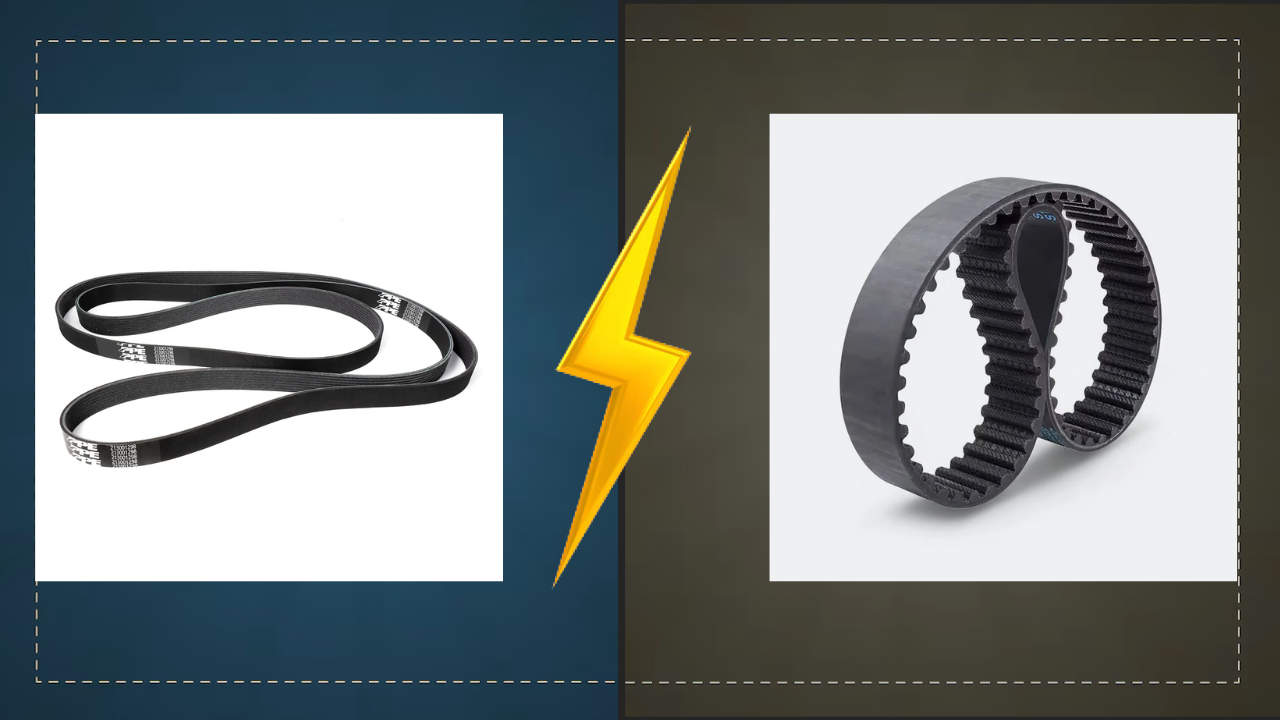
An alternator belt transfers crankshaft power to the alternator and often other engine accessories. A timing belt synchronizes the crankshaft and camshaft so valves open and close at the correct point in the engine cycle.
The alternator belt is normally an external friction belt. The timing belt is a toothed synchronous belt behind an engine cover. Their locations, pulleys, symptoms, replacement procedures, and failure consequences differ. This guide explains how to identify each system.
Key Takeaways
- An alternator belt drives charging and accessory equipment through pulley friction.
- A timing belt synchronizes internal engine rotation through toothed pulley engagement.
- Alternator belt failure can stop charging, cooling, or steering assistance, depending on vehicle design.
- Timing belt failure can stop the engine and may cause severe internal damage on interference engines.
What Is an Alternator Belt?
An alternator belt is the external drive belt that rotates the alternator from the engine crankshaft. On older vehicles, it may be a dedicated V-belt. On many modern vehicles, the alternator is driven by one multi-rib serpentine belt that also powers other accessories.
The name describes function rather than one belt profile. A dedicated alternator V-belt wedges into matching pulley grooves. A serpentine belt uses multiple longitudinal ribs and follows a winding route around accessory pulleys, idlers, and a tensioner.
AAA explains that a serpentine belt commonly powers the alternator, air-conditioning compressor, water pump, power-steering pump, and air pump, depending on vehicle layout (AAA, The Serpentine Belt: One Belt to Rule Them All).
The belt transfers torque through friction. Correct tension forces the ribs or sidewalls against the pulleys. Too little tension or material loss causes slip, heat, noise, and reduced accessory output. Too much tension can overload alternator, idler, tensioner, and water-pump bearings.
Many serpentine systems use a spring-loaded automatic tensioner. A dedicated V-belt may use manual adjustment or movement of the alternator. Some engines use an overrunning alternator pulley that isolates rotational vibration and must operate correctly.
An electric vehicle may not have an engine-driven alternator belt, and some conventional vehicles use different accessory arrangements. Always identify the specific engine and routing diagram before ordering. TranBelt’s Poly-V versus V-belt comparison explains the two common friction-belt profiles.
What Is a Timing Belt?
A timing belt is a toothed belt that connects the engine crankshaft to one or more camshafts. Its tooth engagement maintains the required rotational relationship so intake and exhaust valves operate in time with piston movement.
AAA describes the timing belt as the connection between the crankshaft and camshaft and notes that its teeth fit matching cogged pulleys to prevent normal operating slip (AAA, Car Maintenance Guide: Belts).
The belt usually runs behind protective covers at the front or side of the engine. It may also drive a water pump, oil pump, or balance shaft on certain engines. Tensioners, idlers, pulleys, seals, and covers are parts of the system.
Not every engine has a timing belt. Many use a timing chain or gears. Some engines use a wet timing belt running in engine oil. Vehicle identification and the manufacturer’s service information are therefore necessary before discussing replacement intervals or parts.
Timing belts use molded teeth, tensile cords, backing rubber, and tooth-facing fabric. The profile and pitch must match the pulleys. Tooth count and belt length establish the shaft relationship. TranBelt’s guide to timing belt pitch explains this geometry.
A timing belt is not designed to slip under normal load. A skipped tooth changes valve timing. A broken belt stops camshaft synchronization and usually stops the engine. The damage outcome depends on whether the engine is interference or non-interference.
Alternator Belt vs Timing Belt: What Are the Main Differences?
The main difference is function. An alternator belt supplies accessory power through friction, while a timing belt controls engine synchronization through positive tooth engagement. The following comparison describes typical layouts; vehicle-specific designs can differ.
| Feature | Alternator Belt | Timing Belt |
|---|---|---|
| Primary function | Drives alternator and possibly other accessories | Synchronizes crankshaft and camshaft |
| Common belt type | V-belt or multi-rib serpentine belt | Toothed synchronous belt |
| Drive method | Friction against pulley grooves | Teeth engage timing pulleys |
| Typical location | External and often visible | Behind protective engine covers |
| Normal slip | Possible if tension or grip is insufficient | Not permitted during operation |
| Related components | Tensioner, idlers, alternator, A/C, pumps | Tensioner, idlers, cam pulleys, water pump on some engines |
| Failure effect | Charging loss and accessory shutdown | Engine stops; internal damage may occur |
| Inspection | Visual and rib-wear checks often accessible | Cover removal and service procedures may be required |
| Replacement basis | Condition and vehicle service information | Vehicle manufacturer’s scheduled interval |
| Repair complexity | Usually lower, layout-dependent | Usually higher because engine timing must be preserved |
Alternator belts have longitudinal ribs or V-shaped sidewalls. Timing belts have transverse teeth across their width. A ribbed accessory belt may look “toothed” from the side, but its ribs run along the belt and do not synchronize shafts.
Accessory belts work outside the sealed engine timing area. They are exposed to splash, dust, oil leaks, coolant, road debris, and engine-compartment heat. Timing covers reduce contamination but can hide leaks, debris, misalignment, and wear.
Replacement parts are not interchangeable. A similar circumference or width does not make one belt suitable for another system. Use the vehicle identification number, engine code, production date, accessory options, and an application catalog.
Cost also differs by access and included components. An accessory belt can often be replaced without opening the engine timing system. Timing-belt service may require supports, covers, timing locks, tensioning procedures, seals, pulleys, and a water pump.
No universal replacement interval applies to either category. Follow the owner’s manual, maintenance schedule, and service information for the exact vehicle. Driving conditions, leaks, component wear, age, and prior repair quality can require earlier attention.
How Do Alternator Belts and Timing Belts Work?
Alternator and timing belts both receive rotation from the crankshaft, but they transfer it differently. The accessory belt uses friction and tension. The timing belt uses tooth engagement and controlled pitch.
Friction Drive in Alternator Belts
The crankshaft pulley pulls the alternator belt through contact with its grooves. Belt tension creates normal force, while rib or sidewall friction transmits torque. The alternator load changes with battery charging and electrical demand.
Gates states that an accessory belt transfers crankshaft power to accessories through rib wedging and belt tension (Gates, Understanding the Impact of Loss of Tension).
Slip converts motion into heat. It can reduce alternator speed, weaken charging, glaze the belt, polish pulley grooves, and create squeal. Low tension, worn ribs, contamination, misalignment, seized accessories, or a failing tensioner may cause the problem.
The smooth belt back may run over idlers or drive a smooth pulley. Routing determines pulley wrap and rotation direction. Installing the correct belt on the wrong path can create poor wrap, interference, or reversed accessory rotation.
Synchronous Drive in Timing Belts
Timing-belt teeth enter matching pulley spaces, so the belt advances a fixed pitch for each pulley tooth. The crank pulley controls camshaft movement through the tooth-count ratio. Belt tension maintains engagement and limits tooth movement.
The tensile cords resist elongation and preserve pitch. Tooth fabric manages friction and wear, while the backing and tooth compound transfer load. Incorrect tension, contamination, damaged pulleys, bearing failure, or foreign objects can cause tooth wear or jumping.
Timing marks and service procedures establish the correct crankshaft and camshaft positions during installation. Turning a mis-timed interference engine can cause piston-to-valve contact. This work requires vehicle-specific instructions and appropriate tools.
What Happens When an Alternator Belt Fails?
When an alternator belt breaks or slips, the alternator may stop charging the battery. The charging or battery warning light can illuminate, electrical voltage falls, and the engine may eventually stop when stored battery energy is exhausted.
If one serpentine belt also drives the water pump, coolant circulation may stop and the engine can overheat quickly. Hydraulic power steering assistance may disappear where the belt drives the steering pump. Air conditioning and other accessories can also stop.
AAA notes that serpentine belt failure can remove accessory functions and may cause loss of coolant circulation or power steering, depending on the system (AAA, Make Sense of Car Care: Belts and Hoses).
Warning signs can include squealing, chirping, rib wear, frayed edges, glazing, missing belt sections, tensioner movement, or poor charging. Modern EPDM belts may lose rib material without developing the obvious cracking associated with older compounds.
A failed alternator does not prove the belt is defective. The alternator, tensioner, idlers, overrunning pulley, crank pulley, wiring, battery, or another accessory can be responsible. Diagnose the complete accessory drive and charging system.
Do not continue driving when a broken belt also drives the water pump or steering pump. Stop safely, switch off the engine, and obtain assistance. Never inspect or touch a belt with the engine running.
What Happens When a Timing Belt Fails?
When a timing belt breaks, strips teeth, or jumps, crankshaft-to-camshaft synchronization is lost. The engine may stop immediately, crank without starting, run poorly after a smaller timing shift, or produce abnormal mechanical noise.
In an interference engine, pistons and valves occupy overlapping space at different times. Loss of synchronization can let them collide, bending valves and damaging pistons, cylinder heads, or related parts. In a non-interference engine, the engine normally stops without this contact, although repairs are still required.
AAA distinguishes interference and non-interference engines and warns that timing-belt failure can cause serious internal damage in interference designs (AAA, Make Sense of Car Care: Belts and Hoses).
A timing belt may deteriorate from age, heat, oil or coolant contamination, incorrect tension, seized idlers, water-pump failure, pulley damage, foreign matter, or installation errors. Dayco lists foreign matter, locked components, excess tension, and petroleum contamination among diagnostic causes for belt damage (Dayco, Timing Belt Diagnostics).
Replacing only the belt can leave a failing tensioner, idler, or pump in service. Follow the vehicle manufacturer’s service procedure and parts scope. Gates recommends treating the timing system as a group including the belt, pulleys, tensioners, guides, and water pump where applicable (Gates, Protect the Ride).
After a suspected timing failure, avoid repeated starting attempts. A qualified technician should confirm timing and assess possible internal damage. The correct diagnostic method depends on the engine.
How Can You Tell Which Belt Is Causing a Problem?
Identify symptoms by system rather than sound alone. Charging and accessory problems point toward the alternator or serpentine drive. No-start, timing correlation, low compression, or internal engine symptoms may indicate the timing system.
Warning Lights and Charging Problems
A battery or charging warning light, low system voltage, dimming lights, or a discharged battery can indicate alternator-drive slip or failure. Inspect whether the external belt is present and whether accessory pulleys rotate correctly, with the engine off.
These symptoms also occur with a failed alternator, battery, wiring, fuse, control module, or pulley. Electrical testing is necessary. A new belt cannot repair an internal alternator fault.
Squealing, Chirping and Visible Wear
Accessory-drive squeal commonly indicates slip from low tension, contamination, worn ribs, or high accessory resistance. Chirping can result from misalignment, pulley runout, or damaged ribs. Bearing noise can be mistaken for belt noise.
Look for frayed edges, rib loss, glazing, contamination, uneven wear, displaced belt routing, and a tensioner outside its operating range. Do not spray dressing, solvents, or lubricant on the belt. These can mask the cause and damage modern belt compounds.
TranBelt’s serpentine belt cleaning guide explains when cleaning is appropriate and when contamination requires leak repair and belt replacement.
Engine Misfire, No-Start and Timing Symptoms
A broken timing belt often causes sudden engine shutdown followed by unusually fast or uneven cranking. A belt that has jumped teeth may cause poor running, fault codes, misfire, reduced power, or a no-start condition.
These symptoms overlap with ignition, fuel, sensor, compression, and electrical faults. Timing components are usually covered, so external inspection may not confirm the problem. Scan data, timing marks, compression tests, or controlled cover removal may be required.
Do not use belt appearance alone to extend a scheduled timing-belt interval. A belt can have internal cord, tooth, or adhesion deterioration that is not obvious from the visible backing.
Can an Alternator Belt Affect the Timing Belt?
The two belts normally operate in separate systems, so alternator-belt wear does not directly stretch or drive the timing belt. However, accessory-belt debris or a failed pulley can sometimes enter the timing area on particular engine designs.
Continental documents a vehicle-specific case where abrasion from a V-ribbed belt could contribute to serious engine damage if the timing belt jumped (Continental, Technical Information: V-Ribbed Belt Conversion). This is not a universal failure path.
A failing crankshaft pulley can also disturb accessory-belt alignment and may warrant broader inspection. Oil or coolant leaks can contaminate both systems if they reach their respective belt paths. Correct the leak before installing new belts.
Routine service should inspect the accessory belt, tensioner, idlers, pulleys, and nearby covers. Timing-belt service should follow engine-specific procedures. Do not assume replacing one belt renews the other.
Frequently Asked Questions
Is the alternator belt the same as the serpentine belt?
Often, but not always. Many modern vehicles use one serpentine belt to drive the alternator and several accessories. Older or specialized engines may use a dedicated alternator V-belt. Identify the engine and routing before ordering.
Can a car run with a broken alternator belt?
It may run briefly on battery power, but charging stops. If the same belt drives the water pump or steering pump, overheating or loss of steering assistance can occur. Stop safely and check the vehicle-specific accessory layout rather than attempting to continue.
Can a car run with a broken timing belt?
No. Camshaft synchronization is lost, so the engine normally stops or cannot start. On an interference engine, internal damage may occur. Avoid repeated cranking and have the timing system and engine condition inspected.
Which belt is more expensive to replace?
Timing-belt service is usually more labor-intensive because covers and related components must be removed while engine timing is preserved. Actual cost depends on vehicle access, parts scope, water-pump replacement, damage, labor rate, and regional pricing.
How often should alternator and timing belts be replaced?
Use the vehicle manufacturer’s maintenance schedule. Timing-belt intervals are engine-specific. Accessory belts may be replaced by condition or scheduled guidance. Age, mileage, contamination, tensioner wear, climate, and operating conditions can require earlier service.
Conclusion
An alternator belt is an external friction belt that drives charging and accessories. A timing belt is a toothed synchronous belt that coordinates crankshaft and camshaft rotation. They differ in location, pulleys, drive principle, symptoms, service, and failure risk.
Use vehicle-specific service information for diagnosis and replacement. Inspect the complete accessory or timing system rather than changing a belt in isolation, and treat charging loss, overheating, steering changes, or suspected timing failure as urgent problems.
Sources
- AAA, The Serpentine Belt: One Belt to Rule Them All, retrieved 2026-07-28.
- AAA, Car Maintenance Guide: Belts, retrieved 2026-07-28.
- AAA, Make Sense of Car Care: Belts and Hoses, retrieved 2026-07-28.
- Gates, Protect the Ride, retrieved 2026-07-28.
- Gates, Timing Belt Drive Systems, retrieved 2026-07-28.
- Gates, Understanding the Impact of Loss of Tension, retrieved 2026-07-28.
- Dayco, Timing Belt Diagnostics, retrieved 2026-07-28.
- Continental, Technical Information: V-Ribbed Belt Conversion, retrieved 2026-07-28.