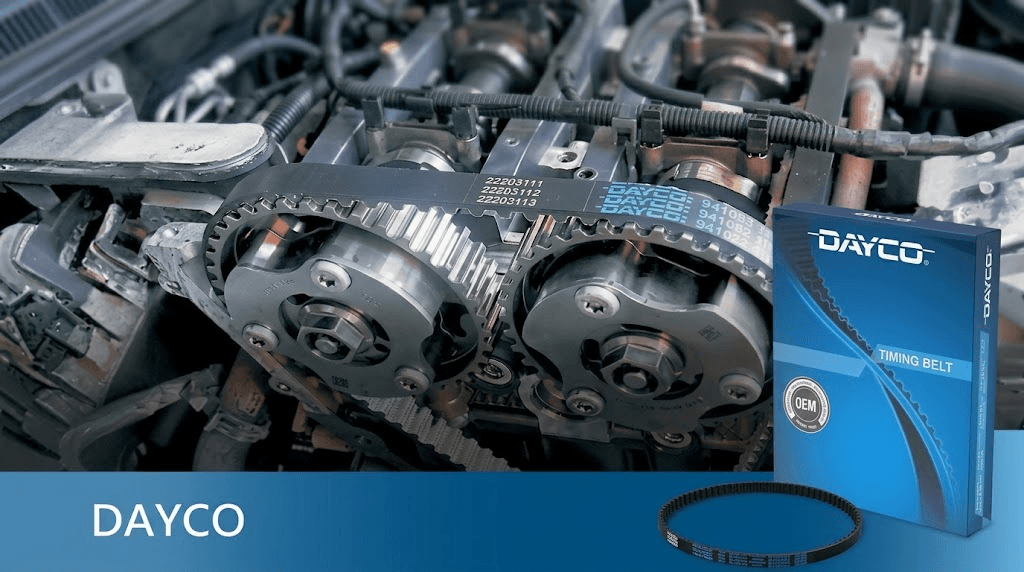
Wet timing belts are a clever engineering idea with a difficult ownership record. Running a toothed belt inside engine oil can reduce friction, noise, weight, and packaging space. The compromise is that belt life becomes closely tied to oil chemistry, fuel dilution, temperature, servicing, and the design of the complete lubrication system.
So, are wet timing belts a good idea in 2027? They can work well in a properly engineered and correctly maintained engine. However, they offer less tolerance for neglected servicing or the wrong oil than many owners expect. For a used vehicle with incomplete history, a conventional dry belt or a proven chain drive may be the safer long-term choice.
Key Takeaways
- Wet belts can reduce friction, noise, weight, and engine size.
- Oil specification matters because the belt operates continuously in lubricant.
- Belt debris may restrict oil flow before the belt actually breaks.
- Newer compounds and protective fabrics are improving oil and wear resistance.
- Better materials do not eliminate maintenance sensitivity or poor system design.
1. What Is a Wet Timing Belt?
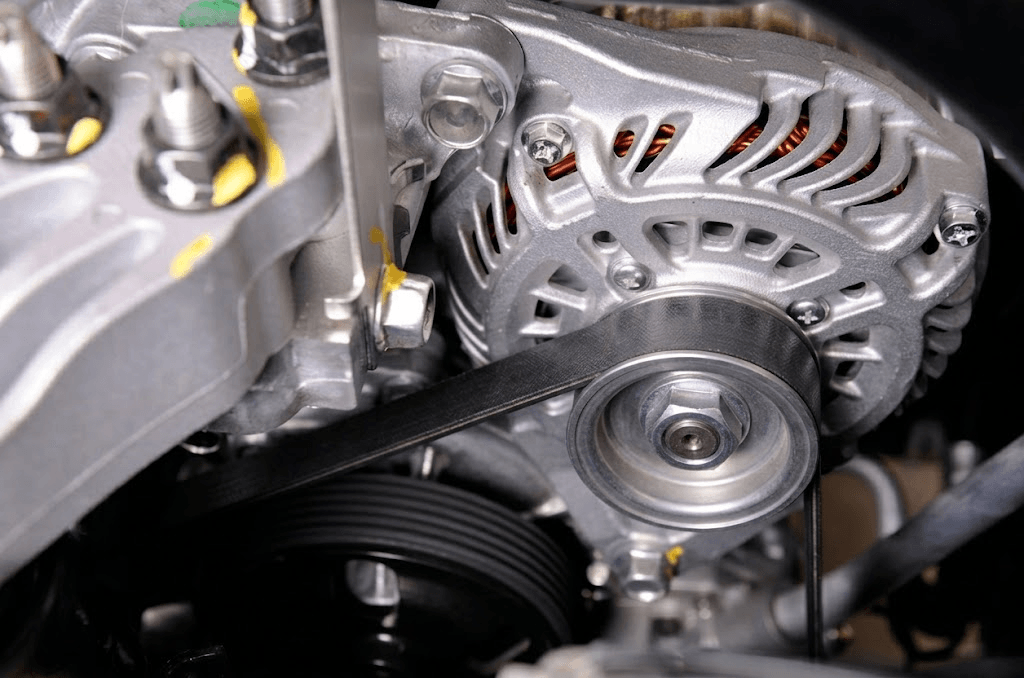
A wet timing belt is a toothed synchronous belt that runs inside an oil-sealed part of an engine. It is also called a belt-in-oil belt, BIO belt, or TBIO belt. Like a conventional dry timing belt, it keeps the crankshaft and camshaft synchronized so the valves open and close at the correct points in the combustion cycle.
The difference is its operating environment. A dry belt runs outside the engine oil behind a protective cover. A wet belt runs directly in engine oil and therefore needs a compound, tensile structure, tooth fabric, and coating designed for long-term lubricant exposure. A normal dry timing belt cannot replace it.
Some engines also use a separate wet belt to drive the oil pump. That belt does not control valve timing, but its failure can still cause a rapid loss of oil pressure. A vehicle may even combine a timing chain with a wet oil-pump belt. Owners should identify the exact engine layout rather than assuming that every belt inside the engine is the camshaft timing belt.
2. How Does a Wet Timing Belt Work, and Why Does It Exist?
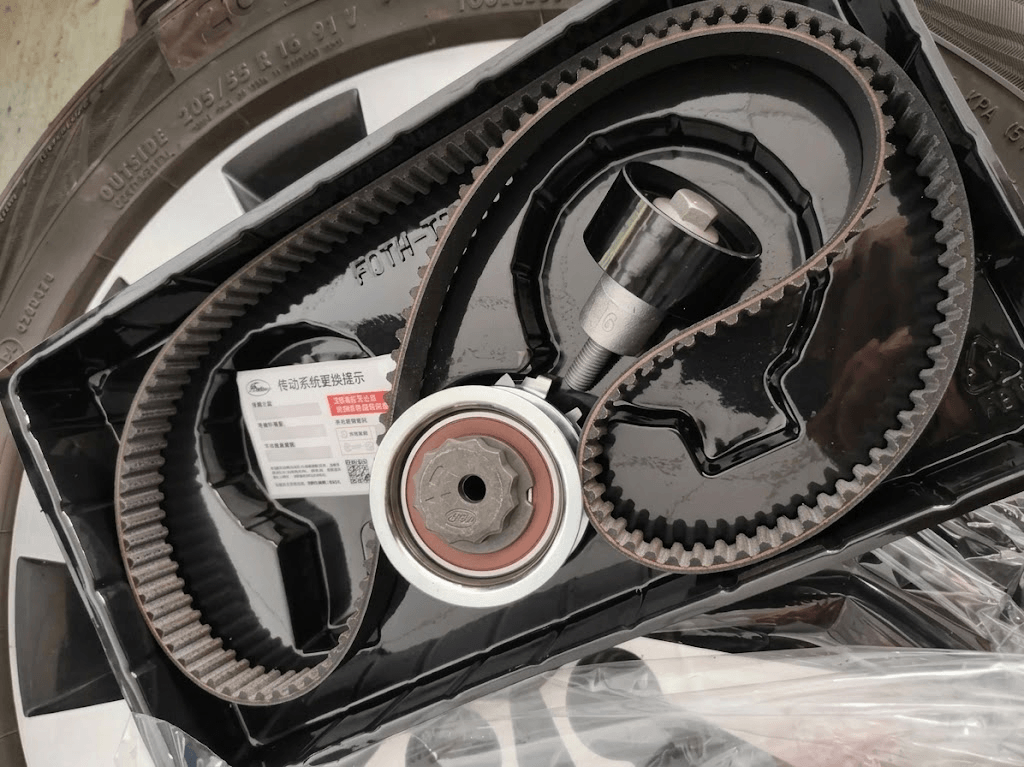
A wet timing belt transfers rotation through molded teeth that engage matching crankshaft and camshaft sprockets. Its tensile cords resist elongation, while its tooth fabric and elastomer body absorb repeated bending and contact loads. Oil surrounds the belt during operation, so every material must remain dimensionally stable in the specified lubricant.
Manufacturers introduced the design to combine several advantages of a belt and a chain. A belt is light, quiet, and does not need metal links or chain guides. Locating it inside the engine can create a compact drive layout. The oil environment can also reduce friction when the belt, lubricant, and engine are designed as one system.
Dayco says it invented belt-in-oil technology in 2007 to combine the compact engine architecture associated with chains with the lower friction and noise of a belt (Dayco, Belt-in-Oil Kits). Continental likewise explains that oil-running timing belts can reduce engine friction and emissions while supporting quiet operation and precise timing (Continental, New CT1228 Timing Belt, 2020).
Those benefits explain why wet belts exist, but they do not guarantee lower lifetime cost. The system exchanges some weight, noise, and friction advantages for tighter control over oil quality, contamination, inspection, and servicing.
3. Why Do So Many People Hate Wet Timing Belts?
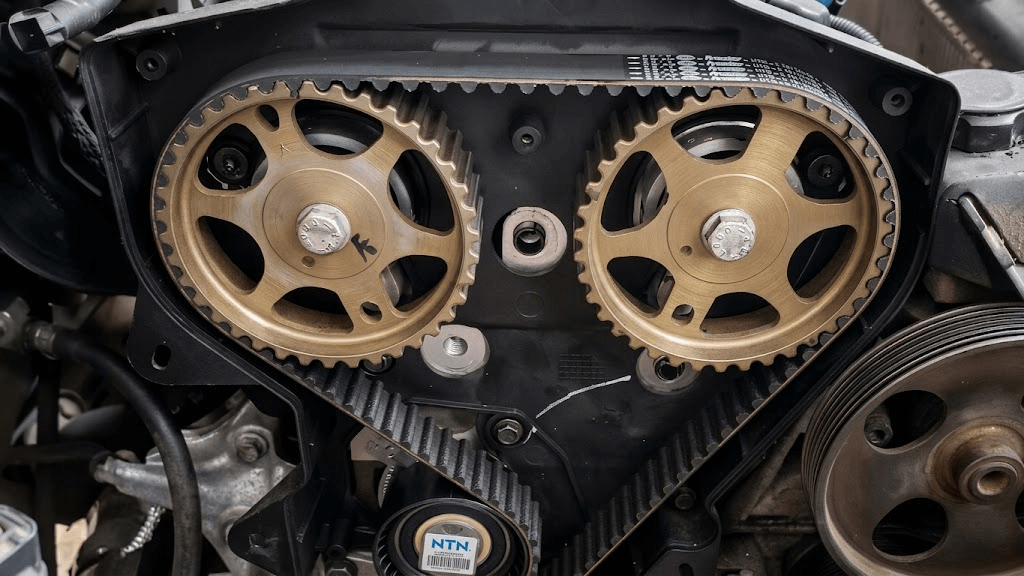
Wet belts are disliked because a component intended to benefit from oil can also be damaged by changes in that oil. The failure may affect both valve timing and lubrication, while inspection and replacement are often more involved than with an external dry belt.
Belt Degradation Can Contaminate the Oil System
A deteriorating wet belt may crack, swell, delaminate, or shed material. The fragments can collect in the sump, oil filter, pickup screen, or narrow oil passages. If the pickup becomes restricted, oil pressure can fall and damage bearings, variable-valve-timing hardware, the turbocharger, or the engine.
This creates a failure mode that owners may not expect. A dry belt is usually evaluated as a timing component. A wet belt must also be considered part of the oil system because its debris can circulate or obstruct flow before the teeth fail.
Oil and Fuel Dilution Can Accelerate Damage
Wet belts depend on the exact manufacturer oil approval, not viscosity alone. Two oils carrying the same SAE grade can use different additive packages and approvals. Using an unapproved oil may expose the belt to chemistry that the manufacturer did not validate.
Fuel dilution adds another variable. Repeated short journeys, incomplete warm-up cycles, injector faults, and other combustion problems can introduce fuel into the oil. The altered fluid may attack the belt or change its dimensions. Delayed oil changes extend that exposure.
Inspection and Replacement Can Be Expensive
A wet belt sits inside the engine, so visual inspection may be limited to an access opening or oil-filler port. Some engines require a width gauge and a manufacturer-specific procedure. A belt can also look acceptable on the visible surface while debris has already reached the sump.
Replacement may involve removing covers, the sump, the oil pickup, an oil-pump belt, seals, fasteners, oil, and filter. The technician must clean the system rather than simply install a new belt. Stellantis’ compensation policy for earlier PureTech 1.0 and 1.2 engines covers qualifying cases involving premature timing-belt degradation for up to 10 years or 180,000 km, illustrating the potential scale of the issue (Stellantis, PureTech Compensation Platform, retrieved 2026-09-21).
4. Are Wet Timing Belt Materials Improving in 2027?
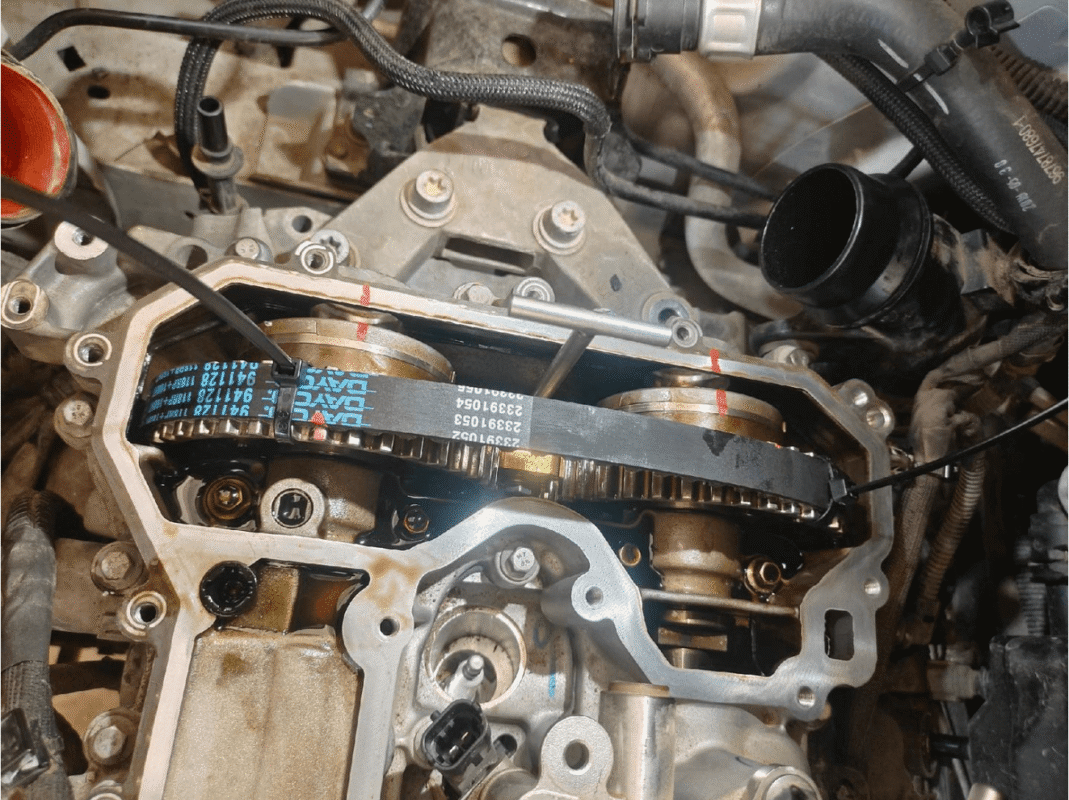
As of September 2026, wet-belt materials are improving, but available evidence cannot establish the reliability of every 2027 application. The clearest progress is visible in replacement belts and newer product generations using more oil-resistant compounds, protected tensile cords, and tougher tooth fabrics.
More Oil-Resistant Belt Compounds
HNBR, or hydrogenated nitrile rubber, is widely used where heat and oil resistance matter. Continental’s CT1228 uses peroxide-cross-linked HNBR with a higher acrylonitrile content than the earlier CT1188. Continental says this change improves resistance to carbon compounds associated with crystallized contaminants in the oil (Continental, New CT1228 Timing Belt, 2020).
Improved Tooth Fabric and Tensile Cords
Modern wet belts combine several specialized layers. Continental describes optimized oil-resistant coatings on glass-cord tensile members and a multilayer wear-protection system on the aramid tooth fabric. Dayco lists glass or hybrid tensile members, fiber-loaded HNBR compounds, and tooth fabrics that may incorporate nylon, aramid, and PTFE coatings.
These changes target elongation, tooth wear, chemical attack, and abrasion. They also show why an updated replacement belt can differ materially from an earlier version even when it fits the same engine.
Why Better Materials Cannot Eliminate Every Risk
A stronger belt cannot prevent damage caused by a blocked pickup, severe fuel dilution, a failed tensioner, incorrect installation, unsuitable oil, or a flawed surrounding system. Materials are only one part of the drive, so improved products do not establish that wet belts now outperform dry belts or chains in every engine.
5. How to Inspect a Wet Timing Belt for Problems
Wet timing belts should be inspected according to the procedure for the exact engine. A visible belt surface is only one part of the assessment. The technician may also need to check belt width, stored fault codes, oil-pressure history, the filter, sump, and oil-pump pickup.
Step 1: Confirm the Engine Uses a Wet Belt
Check the VIN, engine code, production date, and manufacturer service information. Do not rely only on the model name because the same vehicle may have been sold with wet-belt, dry-belt, and chain-driven engines. Also determine whether the wet belt drives the camshafts or only the oil pump.
Step 2: Look for Visible Belt Damage
Use the manufacturer-approved access point and inspection method. Look for swelling, excessive width, cracks, frayed edges, blistering, missing tooth fabric, surface separation, or particles around the visible belt. Some engines require a dedicated width gauge because dimensional growth may indicate material degradation.
Do not pull, twist, scrape, or sharply bend the belt during inspection. A belt that appears acceptable through a small opening may still have hidden tooth damage or may already have released material into the oil.
Step 3: Check the Oil System and Warning Signs
Inspect the oil and filter for rubber or fabric debris. If deterioration is suspected, the sump and oil-pump pickup may also need examination. Low oil pressure, an oil warning light, or evidence of restricted flow requires urgent diagnosis rather than continued driving.
My Motor World lists squealing, grinding, rattling, a check-engine light, low oil pressure, misfiring, and poor idle among possible warning signs (My Motor World, How to Spot Issues With Wet Timing Belts, 2025). These symptoms are not unique to wet belts, and a degrading belt may produce no obvious warning. Professional inspection remains more reliable than waiting for drivability symptoms.
If material damage or debris is found, replacing only the belt may be incomplete. The repair procedure may require cleaning the sump and pickup, replacing the oil-pump belt or affected components, renewing seals and single-use fasteners, and filling the engine with correctly approved oil and a new filter.
6. Wet Belt vs Timing Chain: Which Is Better?
| Factor | Wet Timing Belt | Timing Chain |
|---|---|---|
| Noise | Usually quieter | Often produces more mechanical noise |
| Weight | Lower | Higher |
| Friction | Potentially lower | Usually higher |
| Oil sensitivity | Very high | High, especially for tensioners and guides |
| Inspection | Often difficult | Wear may require diagnostic checks |
| Maintenance | Oil approval and belt condition are critical | Oil quality, pressure, guides, and tensioners are critical |
| Failure risks | Swelling, delamination, debris, tooth loss | Stretch, guide wear, tensioner failure, tooth jump |
| Repair complexity | Often high | Often high |
| Best suited for | Compact, quiet, low-mass engine designs | Applications prioritizing a durable metal drive system |
A wet belt is better when low noise, low rotating mass, and compact packaging are primary design goals. It can deliver precise timing without the metal-to-metal character of a chain. In a well-developed engine with correct oil and disciplined maintenance, the technology is reasonable.
A timing chain is often better for buyers who want a metal drive and do not want a scheduled belt replacement. However, a chain is not maintenance-free. Dirty or incorrect oil can impair hydraulic tensioners, while worn guides and chain elongation can cause noise, timing errors, and expensive repairs.
Neither system wins solely by material. The best choice is the proven implementation in the specific engine. A troublesome chain system can be worse than a mature wet-belt design, while a maintenance-sensitive wet belt can be less attractive than a well-proven chain.
7. Dry Timing Belt vs Wet Timing Belt
| Factor | Dry Timing Belt | Wet Timing Belt |
|---|---|---|
| Operating environment | Outside engine oil | Runs inside engine oil |
| Oil exposure | Oil contamination is abnormal | Continuous oil contact is intended |
| Inspection difficulty | Usually easier | Often more restricted |
| Replacement access | Commonly more direct | May require opening oil-sealed areas |
| Oil-system contamination risk | Low | Belt debris may affect oil flow |
| Noise and friction | Quiet and efficient | Potentially quieter with lower friction |
| Maintenance sensitivity | Sensitive to age, tension, heat, and leaks | Also highly sensitive to oil approval and fuel dilution |
| Long-term ownership | Predictable when intervals are followed | More dependent on servicing and engine-specific history |
A dry timing belt is usually easier to understand and inspect. It stays away from engine oil, so its degradation does not normally contaminate the sump or pickup. Its replacement interval is still important, and external oil or coolant leaks can damage it.
A wet belt can offer packaging and friction advantages, but it usually demands closer attention to service history and may require more involved replacement work.
For long-term ownership, a proven dry-belt system is generally the more predictable option. A wet belt makes the stronger case when the specific engine has a good service record, the maintenance history is complete, and the owner is willing to follow the exact oil and inspection requirements. For the mechanical differences between friction belts and toothed drives, see timing belts versus V-belts.
8. Frequently Asked Questions
Are All Wet Timing Belts Unreliable?
No. Reliability varies by engine design, belt generation, lubricant, operating conditions, and maintenance. A known problem in one engine family does not prove that every belt-in-oil system will fail. Evaluate the exact engine code, service bulletins, inspection procedure, and maintenance record.
Can the Wrong Oil Damage a Wet Timing Belt?
Yes. A wet belt is validated with specific oil chemistry, so viscosity alone is not enough. Use the exact manufacturer approval stated for the engine. If the service history is unclear, obtain professional advice rather than assuming that a recent oil change has removed earlier exposure.
Should You Buy a Used Car With a Wet Timing Belt?
Buy only after verifying the engine type, maintenance invoices, correct oil approvals, updated replacement interval, recall or warranty status, and belt condition. Missing records raise the risk because incorrect oil or delayed servicing may leave damage that is not obvious during a short test drive.
Can a Wet Timing Belt Be Converted to a Chain?
Usually not as a practical repair. The belt, sprockets, tensioning system, covers, oil passages, cylinder head, and control strategy are designed together. A conversion would require major engineering and validation. Use the manufacturer-approved replacement system unless a documented factory solution exists.
9. Final Verdict: Are Wet Timing Belts a Good Idea in 2027?
Wet timing belts remain a defensible engineering choice, but they are not automatically a good ownership choice. Their low noise, low mass, compact size, and friction benefits are real. Material improvements in HNBR compounds, tensile-cord coatings, aramid fabrics, and wear layers also make newer belts more capable than early versions.
The weakness is limited tolerance for errors outside the belt itself. Incorrect oil, fuel dilution, delayed servicing, hidden debris, or incomplete replacement work can turn a timing component into an oil-system problem. That risk is especially relevant when buying a used car without complete records.
If you are shopping for a vehicle in 2027, judge the specific engine and service history, not the technology label. A well-documented wet-belt vehicle with an updated belt and correct oil can be a reasonable purchase. If maintenance history is missing or the engine family has unresolved belt issues, a proven dry timing belt or timing chain is the safer option. For replacement-belt selection, contact TranBelt with the engine code, VIN details, and existing belt number.
Sources
- Continental, New CT1228 Timing Belt for Special Citroen and Peugeot Engines, published 2020, retrieved 2026-09-21.
- Dayco, Belt-in-Oil Kits, retrieved 2026-09-21.
- My Motor World, How to Spot Issues With Wet Timing Belts, published 2025, retrieved 2026-09-21.
- Stellantis, PureTech Compensation Platform, retrieved 2026-09-21.